
 Settings
 Central-Western Crete
 East Crete
 See the route
 PREHISTORIC PERIOD
Non-organized archaeological site
 PREHISTORIC PERIOD
Non-organized archaeological site
On the hill Koufota of Agia Photia, Siteia, plain, about 350 m from the homonymous necropolis, a rectangular building of 600 m² with 38 rooms, a central courtyard and an entrance to the west was excavated. The building dates to the Middle Minoan period (about 2000-1900 BC). It is surrounded by a fortification wall, which makes it unique for the Minoan period. The main building consists of eight complexes of two or three rooms with internal doors and access from the central courtyard. A circular building, probably a granary, was discovered south of the large building. The cemetery on the beach of Agia Photia is one of the largest cemeteries of the Pre-Palatial period. There are two types of graves, the simple pit graves and the primitive chamber-type tombs, which constitute most cases.


 ARCHAIC TO ROMAN PERIODS,
PREHISTORIC PERIOD
ARCHAIC TO ROMAN PERIODS,
PREHISTORIC PERIOD
The royal villa or small Minoan palace of AgiaTriada, as the Italian archaeologists who brought it to light at the beginning of the previous century called it, was built around 1600 BC on a hill and is one of the most important monuments of Minoan architecture with rich finds. It is assumed that it served as the summer residence of the king of Phaistos, while other researchers believe that the anax of Phaistos used it after the palace’s destruction, but it might have also been used alongside the palace of Phaistos. It consists of two wings forming an irregular L-shape, and, while it does not have the dimensions of the palaces of Phaistos and Knossos, it bears all the characteristics of palatial architecture. The complex stands out for its elegance and impressive decoration.
The Royal Villa was built around the 16th century BC (Late Minoan IA). After the destruction of the palaces (1450 BC) on the north side of the villa, a “Mycenaean-style” megaron was erected. In the Geometric period (8th c. BC), the Villa was a place of worship. A sanctuary dedicated to Zeus Velchanos was built during the Hellenistic era (4th – 1st century BC).
 PREHISTORIC PERIOD
Non-organized archaeological site
At Mandalia and Mandalia Kefalas or Amoudoplaka sites, there are at least two cemeteries, dating from the Sub-Minoan to the Orientalizing period (1070-600 BC). The first consists of rock-cut chamber tombs with dromos (a long entrance passage) and the second of built tholos tombs.
 PREHISTORIC PERIOD
Non-organized archaeological site
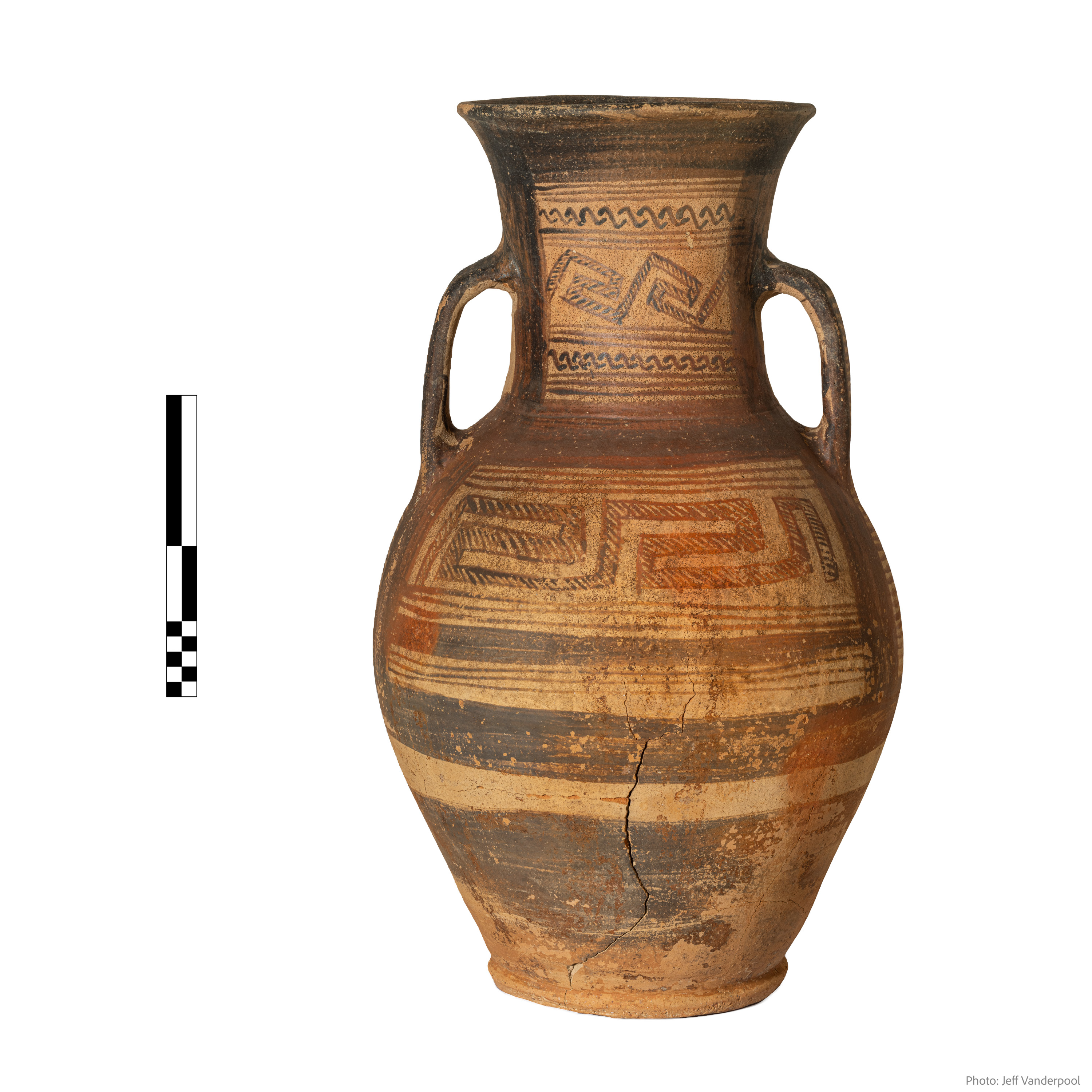
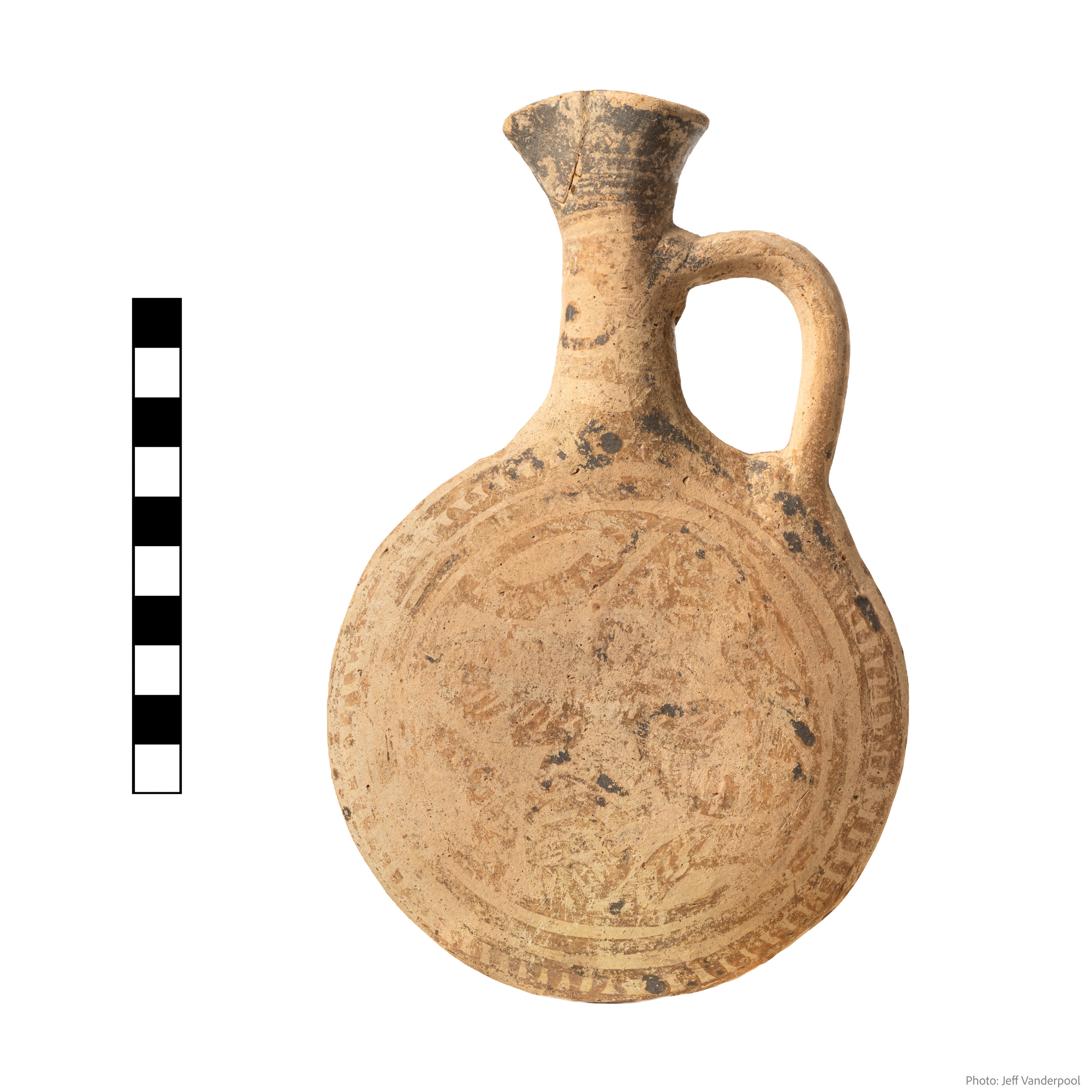
In 1954, Nikolaos Platon, Curator of Antiquities at that time, conducted a small excavation in a burial cave at the site of “Stefanouli” or “Skistra” near Agios Stephanos during the archaeological research on eastern Crete on behalf of the Archaeological Society and brought to light about ten vases of early Geometric times.
Based on the available archaeological data, the question of the connection of the burial cave with a settlement cannot be answered with certainty.
 PREHISTORIC PERIOD
Non-organized archaeological site
An organic dye manufacturing facility was found in Alatsomouri. The site has a series of nine rock-cut basins associated with channels and remains of stone walls. It dates to the Middle Minoan IIB (c. 1800/1700 BC). Through residue analysis, three dyes (purple, yellow and red) were identified, as well as lanolin, the oil associated with sheep wool.


 PREHISTORIC PERIOD
The ancient city of Amnissos was located in the fertile valley of Karteros. The name of Amnissos (a-mi-ni-so) is also found in many Linear B tablets found in the palace of Knossos and is mentioned by many ancient Greek writers, such as Homer and Strabo. During long archaeological research, the most important excavations were conducted at the western and eastern foot of the hill of Palaiochora. A sanctuary of historical times was located at the western foothills, which, according to an inscription, was dedicated to Zeus Thenatas. The sanctuary, built over a building of the Middle Minoan period, was in use from the Protogeometric to the Roman period. A building of the MM III – LM I period was entirely revealed at the eastern foot of the hill. It is named “Villa of the Lilies” after thewall paintings depicting lilies found inside it. During conservation works at the sanctuary of Zeus Thenatas, as well as new excavations west of the sanctuary, a Late Minoan settlement (LM III) came to light.


 ARCHAIC TO ROMAN PERIODS
Non-organized archaeological site
The first settlement and burial site of Anavlochos date in the late Late Bronze Age.
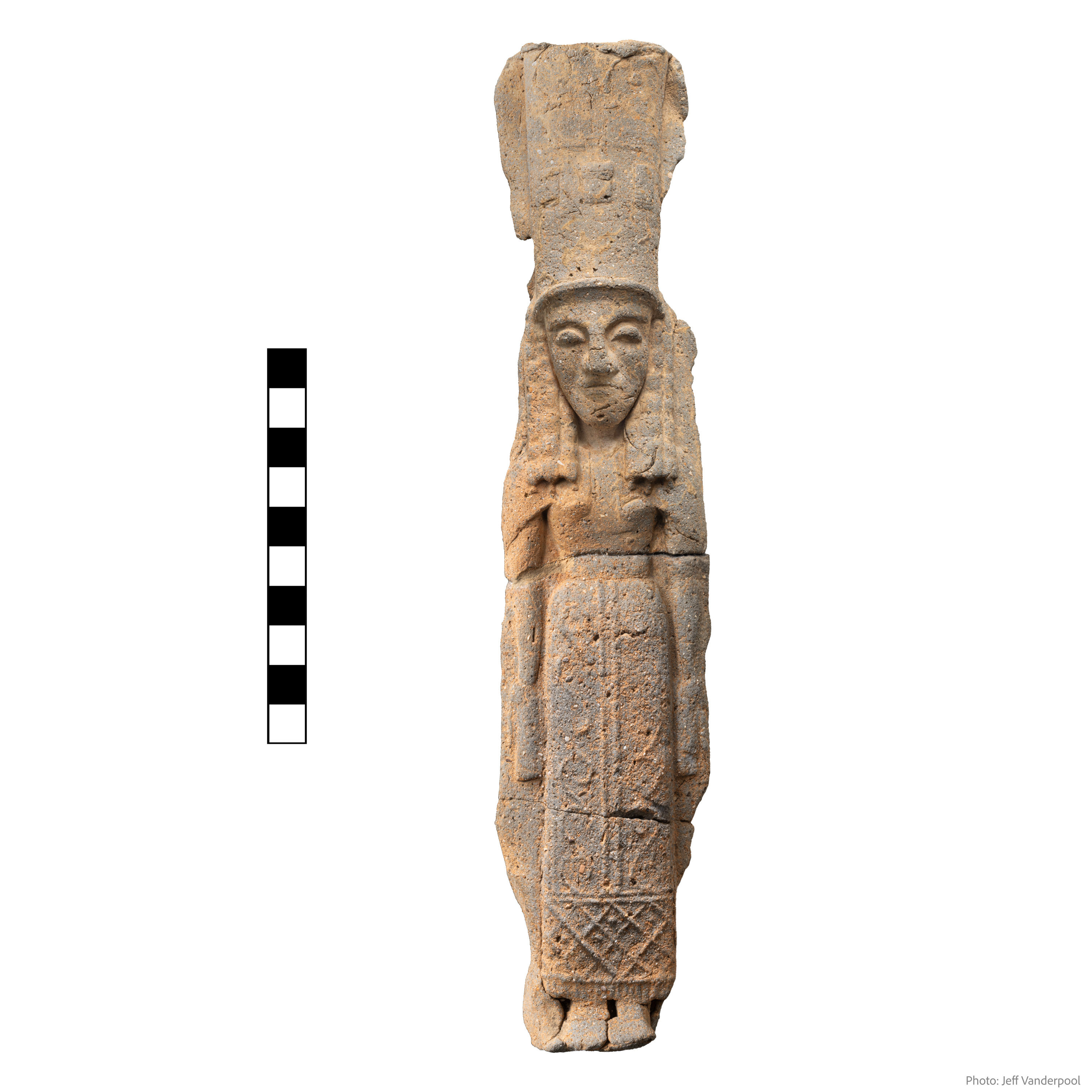
A complete and well-defined sector inside the settlement, the “Quartier de la forge”, was discovered, bearing evidence of intensive iron objects manufacture between the mid-8th and early 7th century BC. A series of stone funerary tumuli were found in the necropolis, and the excavation of one of them revealed an imposing circular monument made of local limestone, enclosed by a 15-metre diameter peribolus. The tumulus covered a small apsidal pit containing a deposit of fifteen intact vases and five spearheads. The necropolis dates between 750 and 650 BC. On the “Kako Plai” slope, a sanctuary with a throne and cult vessels was uncovered, used from the 10th c. BC until at least the 5th c. BC. Clay figurines, tiles, and animal figurines (1070-450 BC) were found in votive deposits and hollows in the rocks around the sanctuary site.


 PREHISTORIC PERIOD
Non-organized archaeological site
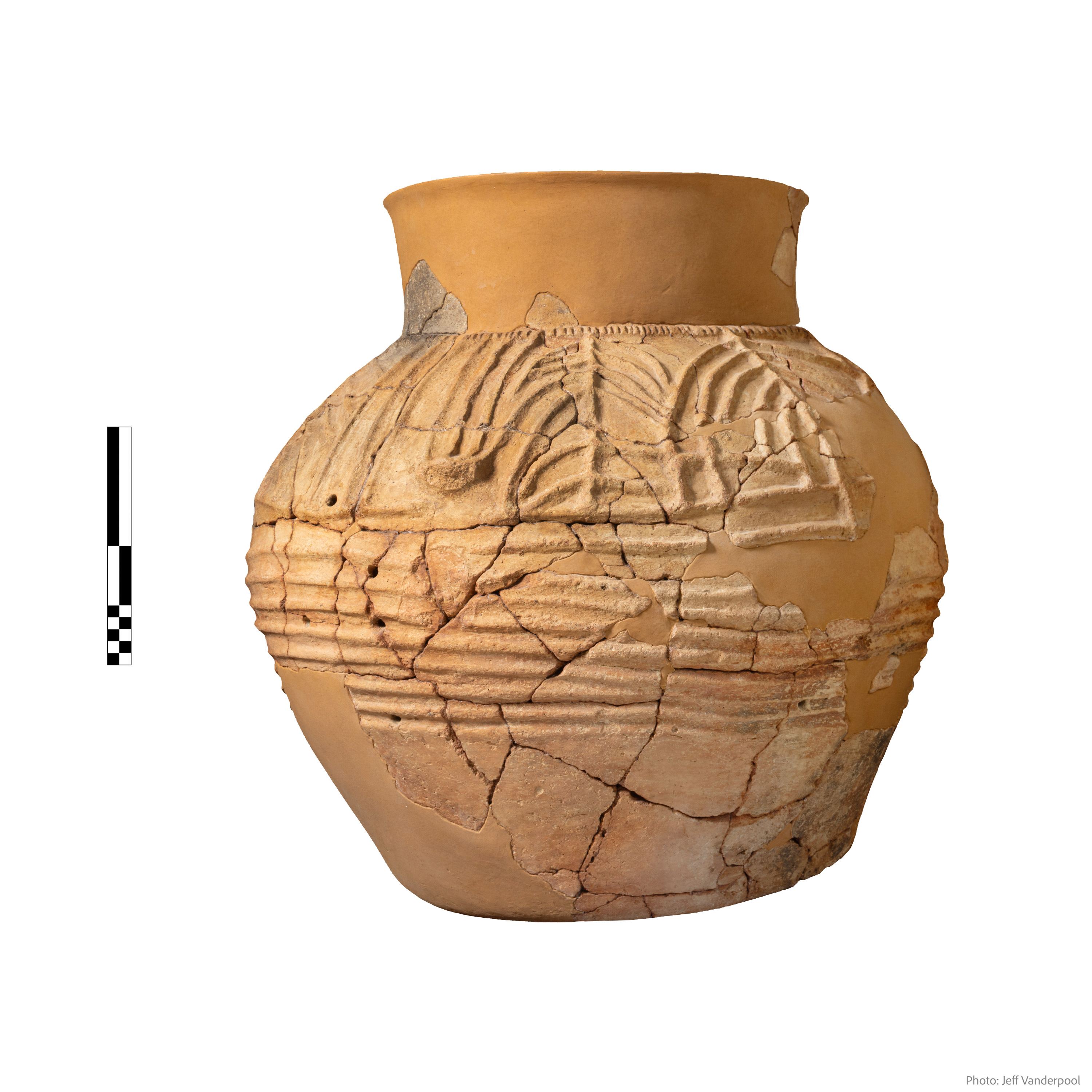
A settlement of the Pre-Palatial period, 3200-2700 BC, was investigated on the hill of Aphrodite’s Kephali. The naturally protected site, reinforced by a fortification, had a lot of storage vessels, preserving olive oil and wine residues, demonstrating the first samples of olive and grape cultivation and exploitation.
 ARCHAIC TO ROMAN PERIODS,
BYZANTINE PERIOD
ARCHAIC TO ROMAN PERIODS,
BYZANTINE PERIOD
Aptera was founded in the Geometric period, although the city is mentioned in the Linear B tablets of Knossos (A-pa-ta wa). The city’s flourish began in the Classical– Hellenistic times, when its sanctuaries were organized, the central settlement was secured with strong fortifications 3,480 m long and the theater was constructed. In the 4th c. BC issues coins and, between the 3rd and 2nd c. BC developed relations with the major centers of the Hellenistic world. The city flourished again during the Roman period (69 BC – 365 AD), as indicated by the large public buildings preserved today. Its habitation continued until the Byzantine period (7th century AD), when a strong earthquake destroyed it. Saracen pirate raids contributed to its final destruction. The core of the archaeological site includes the double temple of Apollo and Artemis, the theater, the Roman cisterns, the baths and the so-called “Bouleuterion”.

 PREHISTORIC PERIOD
The palace of Archanes is estimated to have been about the same size as those of Knossos and Phaistos. The central part of the palaceis located in Ano Archanes, within a district known as “Tourkogeitonia”. Among the various archaeological finds excavated are a monumental entrance with a propylon, several rooms, staircases, a skylight, storage areas, as well as part of the central courtyard of the palace. At the same time, parts of the palace have been found in other town locations. Water tanks, a part of an ancient theater, the storage area of the palace’s archives, as well as part of its fortification walls are included in the finds.
The building probably consisted of two levels and was decorated with wall paintings. It is estimated that the Palace of Archanes was erected around 1900 BC, during the same period as the other important Minoan palaces of the wider area. It was destroyed by an earthquake in 1700 BC and again towards 1600 BC, after which it was reconstructed in both cases. Its final destruction occurred around 1450 BC; however, it is estimated that this site continued to be in use until about 1200 BC.
 PREHISTORIC PERIOD
Within an area of about 20 acres, filled with vines, olive trees, cypresses, pines and bays, extends the necropolis at Fourni, where burial buildings were discovered. The use of the cemetery dates from 2400 BC to 1200 BC. The cemetery had been founded in the southern and eastern parts and at the top of the hill. Most burial buildings were used for decades and included successive burials. Each complex has more than one chronological phase.
 PREHISTORIC PERIOD
The cemetery layout was based on an organized design. The primary use of the cemetery dates to the Final Palatial/Postpalatial period, around 1450-1200 BC. Many tholos tombs with dromos or stairs have been revealed, carved into the natural bedrockand organized spatially in clusters. Raw stones and slab-shaped stelae had been used to mark some tombs. Most graves were family, with successive uses, including warrior burials. The larnakes iconography reflects religious perceptions, as sacred symbols such as double axes and consecration horns areubiquitous. Many vases derive from the cemetery, the bronze tools and weapons are remarkable, and the variety of jewelry and seal stones is impressive.
 ARCHAIC TO ROMAN PERIODS,
PREHISTORIC PERIOD
ARCHAIC TO ROMAN PERIODS,
PREHISTORIC PERIOD
Axos, built on the northern foothills of Mount Ida at an altitude of 550 m, was one of the most important cities of Crete in antiquity.
The earliest archaeological remains date to the Early Minoan period. However, a continuous habitation of the site is attested from the Late Minoan period onwards. The city flourished mainly during the Archaic period and during Hellenistic and Roman times.
Part of the Hellenistic settlement of ancient Axos was discovered at the eastern foothill of the acropolis. At the southwestern foothills of the acropolis, excavations have brought to light part of the ancient necropolis, with Archaic, Hellenistic and Roman period burials. Approximately 700 m from the ancient acropolis, at the northern foot of the Chalapa hill, Roman vaulted graves are preserved visible in clusters. The graves are partly cut into the rock, with a built superstructure.
On the eastern slope of the ancient acropolis, the remains of a sanctuary of Aphrodite and numerous clay figurines and bronze votive offerings were discovered.
ARCHAIC TO ROMAN PERIODS
Non-organized archaeological site
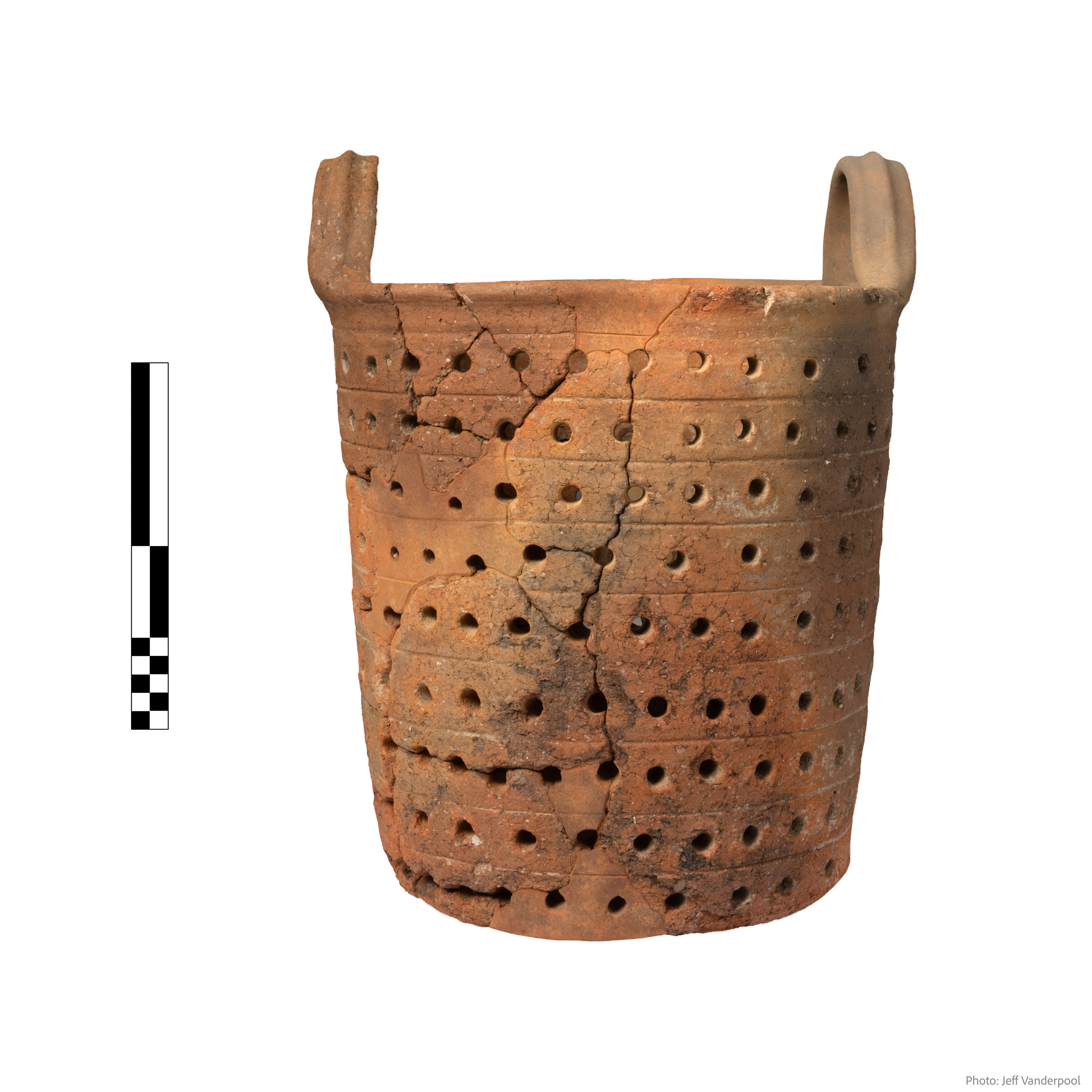
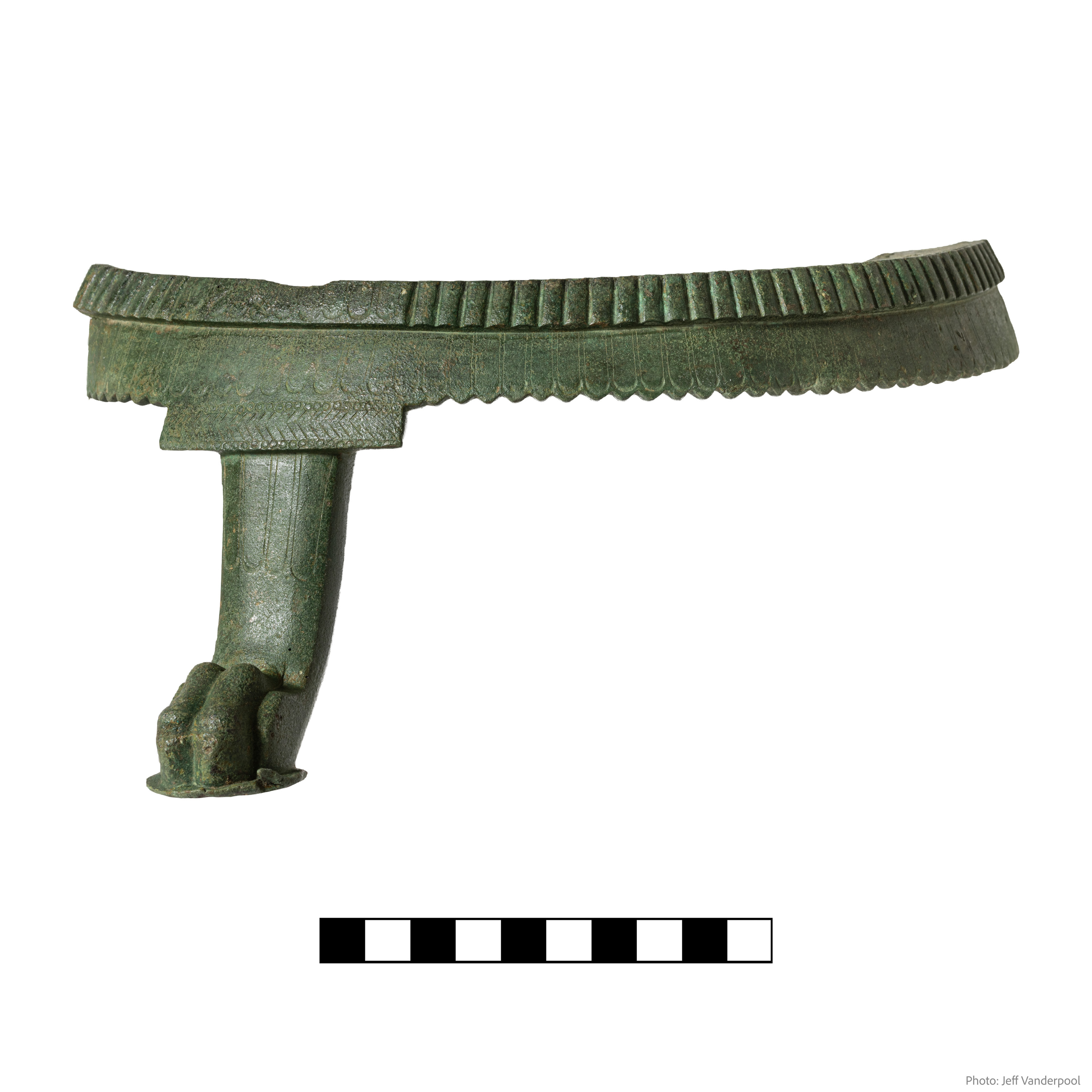
The site was initially inhabited during the Late Neolithic and Early Bronze Age. It is a unique example of a Greek Archaic city in the Aegean area, inhabited from the 7th to the 5th c. BC, with cobbled roads leading to an open assembly area and public buildings, the so-called “Communal Dining Hall”, “Andreion”, and the “Monumental Civic Building”. Most of these public buildings’ function was related to food production and consumption control. There were, as it seems, buildings for food processing and storage and halls designated for public meals and festivities. The city’s destruction in the first quarter of the 5th c. BC is probably related to the expansive policy of Hierapytna. The site was repopulated in the 3rd c. BC for a short period.


 PREHISTORIC PERIOD
Non-organized archaeological site
The Late Minoan IIC settlement of Chalasmenos in Monastiraki, Ierapetra, was relatively large for the period, comprising an estimated 4,000 m² and providing evidence for urban planning. The site was divided into four quarters, including roughly paved pathways, while an open space (square) occupied the settlement’s center. A communal shrine containing numerous figurines of the “goddess with upraised arms” type, snake tubes, plaques, kalathoi, and pithoi were found at the northeastern edge of the site. In the Neopalatial period (1200-1050 BC), a large central building with eleven rooms was investigated in the settlement at “Chalasmenos”, which yielded important finds. A series of houses with interesting architectural features and three continuous Megara were found, which comprise precursors of the early Iron Age andreia (heroa).
A shrine with a megaron-like plan, consisting of two rooms with a horizontal wall, was excavated. Parts of six large figurines of the “goddess with upraised hands” type and other ritual objects were found. 200 m southwest of the Chalasmenos settlement, a tholos tomb dating to the Post-palatial period (1100-1000 BC) was discovered. It contained five burials, accompanied by 27 clay vases of various types, ranging from stirrup jars to skyphoi and two spindle whorls.


 PREHISTORIC PERIOD
Non-organized archaeological site
On the top of the Souvloto Mouri hill, a building dating to the Protopalatial period was discovered. Its shape is ellipsoidal, a rare element for the Minoan standards, with ten rooms arranged radially around a small internal paved courtyard with a water cistern. Some scholars have considered the ellipsoidal plan accidental, but it may have been due to the ground slope or the curved walls of earlier buildings. A domestic shrine was found within the building.


 PREHISTORIC PERIOD
The earliest phase of the significant settlement in Chamalevri dates from ca. 2600 BC,covering all Minoan periods. Extensive one-storey and two-storey buildings with elaborate architectural and construction details came to light on the two hills. The outdoor workshop facility for producing fragrant oils, revealed on the Tsikourgiana hill, dating to ca. 2100-2000 BC, is very interesting. Hearths and pyres, waste pits, stone tools and special-purpose clay vases with burn traces due to extensive contact with fire indicate an organized industrial installation. Miniature cups were probably used as weight standards, while the numerous obsidian blades can be associated with slicing aromatic raw material, such as iris roots. The industrial installation in Chamalevri indicates the existence, as early as 2000 BC, of developed perfume production in Crete.
PREHISTORIC PERIOD
The first inhabitants settled in Chrysokamino around 3000 BC. Soon, a metallurgy workshop for producing bronze was established, which remained operational for almost a millennium. The main phase of bronze production dates in the late Pre-palatial to early Protopalatial period. Bronze ores were imported from other locations in the Aegean, such as Kythnos and Lavrio. Bronze smelting was the primary activity at Chrysokamino. Then, the bronze produced was transported elsewhere, where it was melted again and cast in moulds to create bronze objects. Apart from an apsidal structure with a hearth, which may have been used as a kitchen, no architectural remains were found at the site.
ARCHAIC TO ROMAN PERIODS,
PREHISTORIC PERIOD
Non-organized archaeological site
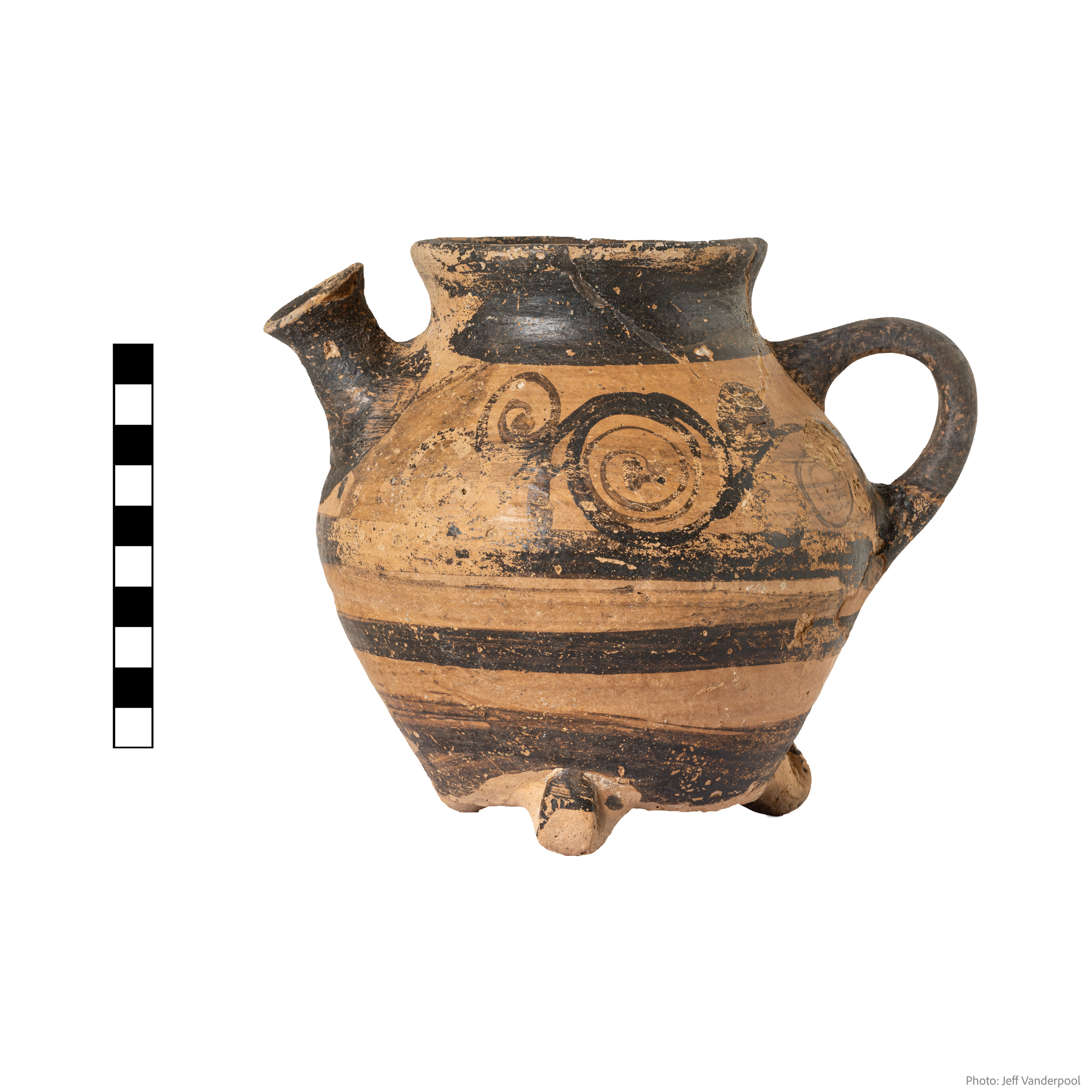
Τhe wall remains and a large quantity of pottery, found on the island’s northern coast, indicate activity in the Final Neolithic period (4500-3000 BC). A significant presence is observed during the Middle Minoan period (2100-1600 BC), when the coastal settlement was built in the northwestern part of the island. The inhabitants specialized, among other things, in the processing of purple dye, and the settlement was a significant commercial station in the Minoan navigation network. The settlement was abandoned simultaneously with the destruction of the palaces in Crete (around 1450 BC). The island remained uninhabited until Hellenistic times. There is a strong presence in the western part of the island, while in the eastern part, architectural remains of a Hellenistic period fortification were found, consisting of a wall about 200 m long, with two preserved towers. The settlement of Chrysi in Roman times is linked to the quick economic development of Roman Ierapetra on the opposite coast. During this period, a more intense presence is observed around the church of Agios Nikolaos (west of the island), where numerous architectural remains (houses, cemetery, cistern) and pottery have been found.


 ARCHAIC TO ROMAN PERIODS
Non-organized archaeological site
In the second half of the 8th c. BC, Dreros was developed and then became a city-state. The cult and administrative center of the city was located in the area of two hills. Dreros occupied a particularly strategic location as it overlooked fertile plains and controlled the only passage from central to eastern Crete between Mount Kadistos (Timios Stavros) and Dikti. The city flourished until the Hellenistic era.
From the necropolis in Dreros, tombs of the Late Geometric/Early Orientalizing period have been excavated, belonging to the type of funerary enclosures (square or rectangular spaces with stone walls at a low height). They were organized in groups of two or three around a central tholos tomb dating to the Sub-Minoan period. The rectangular rock-cut tombs had dry-stone walls. Remarkable artifacts accompanied the burials. One of the earliest (8th – 7th c. BC) known Greek temples is dedicated to Apollo Delphinios or Apollo Pythios. In the center of the main temple is a hearth flanked by two columns, and in the southwest corner is a built pedestal and an offering table. The architectural elements of the temple refer to “Minoan” and “Greek” sanctuaries.The inscription with the oath of the Drerian youths derives from the building.


 ARCHAIC TO ROMAN PERIODS,
BYZANTINE PERIOD,
PREHISTORIC PERIOD
ARCHAIC TO ROMAN PERIODS,
BYZANTINE PERIOD,
PREHISTORIC PERIOD
The ancient city mainly bears traces of life from the Geometric to the Early Byzantine times, without lacking elements of the uninterrupted use of the area from the Early Bronze Age (3rd millennium BC) to modern times.
The necropolis of Orthi Petra dominates the western part of Prines hill, which, with the excavation data to date, starts from the late Protogeometric (870/850 BC) and reaches the Archaic period (600/550 BC). Hellenistic and Roman phases of the ancient city, buildings and paved roads have been unearthed on the part of the renowned necropolis. Also, a whole district of the Hellenistic period with houses and a pentastyle Doric propylon (400 BC) with the peribolus of a sanctuary were excavated at Nisi, on the western hill of modern Eleutherna. Monuments and material remains are scattered throughout the area, while in the northern part of the acropolis at the top of Prines hill, the building remains date mainly to Roman and Early Christian times. The diachronic core of the ancient city is located on this site, as evidenced by the architectural remains of all the chronological phases.
 PREHISTORIC PERIOD
Non-organized archaeological site
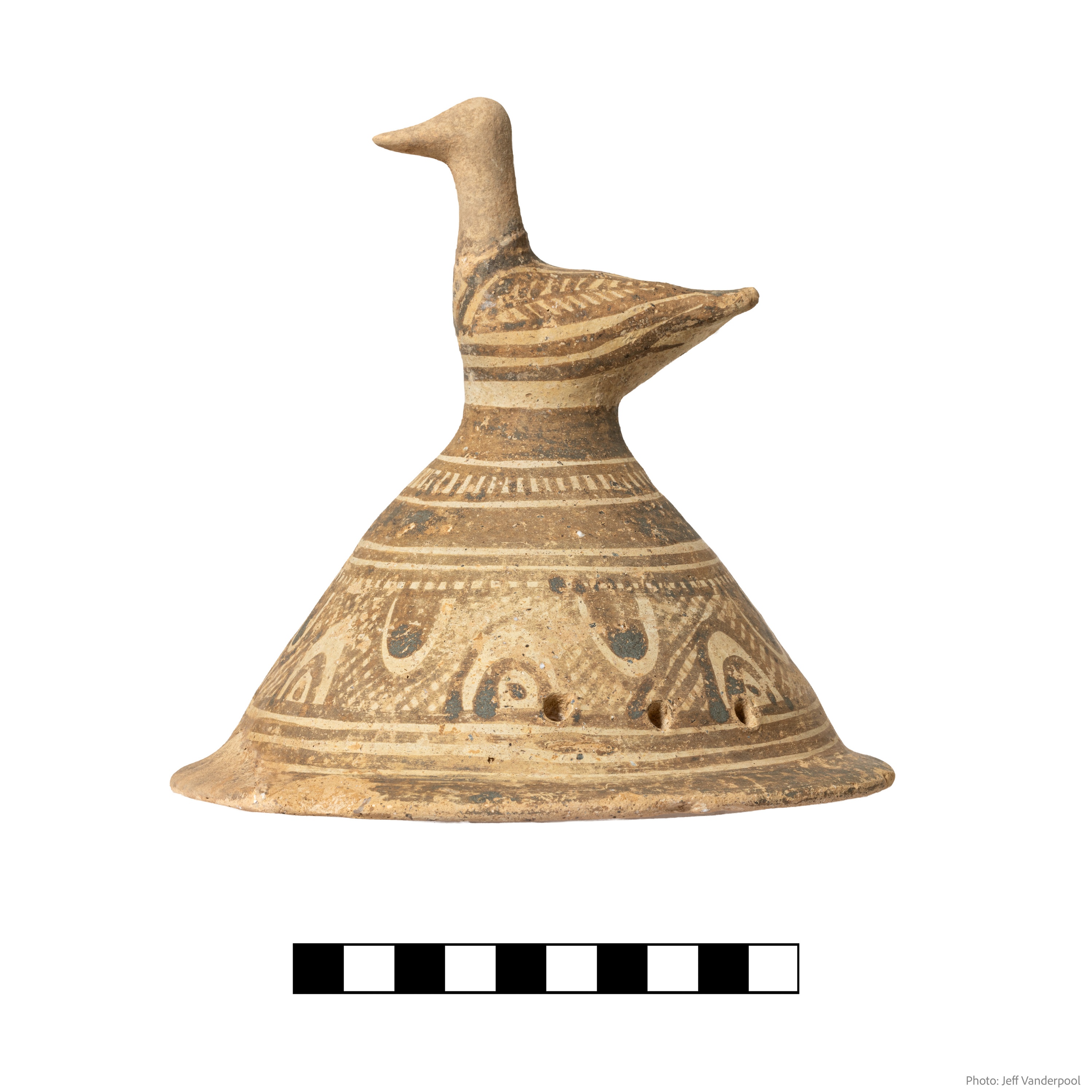
North of the village of Episkopi, a cemetery (LM IIIA – IIIC) consisting of chamber tombs and burials in larnakes has been discovered. The number of clay grave offerings, the presence of a large quantity of imported pottery from mainland Greece and Chania and the richly decorated sarcophagi indicate the existence of a prosperous settlement with a lifespan from LM IIIA to at least LM IIIC, which maintained contacts with both mainland Greece and western Crete. The cemetery was probably also in use during the Sub-Minoan phase, as indicated by a stirrup jar and a duck vase.
 PREHISTORIC PERIOD
Non-organized archaeological site

 ARCHAIC TO ROMAN PERIODS,
PREHISTORIC PERIOD
ARCHAIC TO ROMAN PERIODS,
PREHISTORIC PERIOD
Non-organized archaeological site
 PREHISTORIC PERIOD
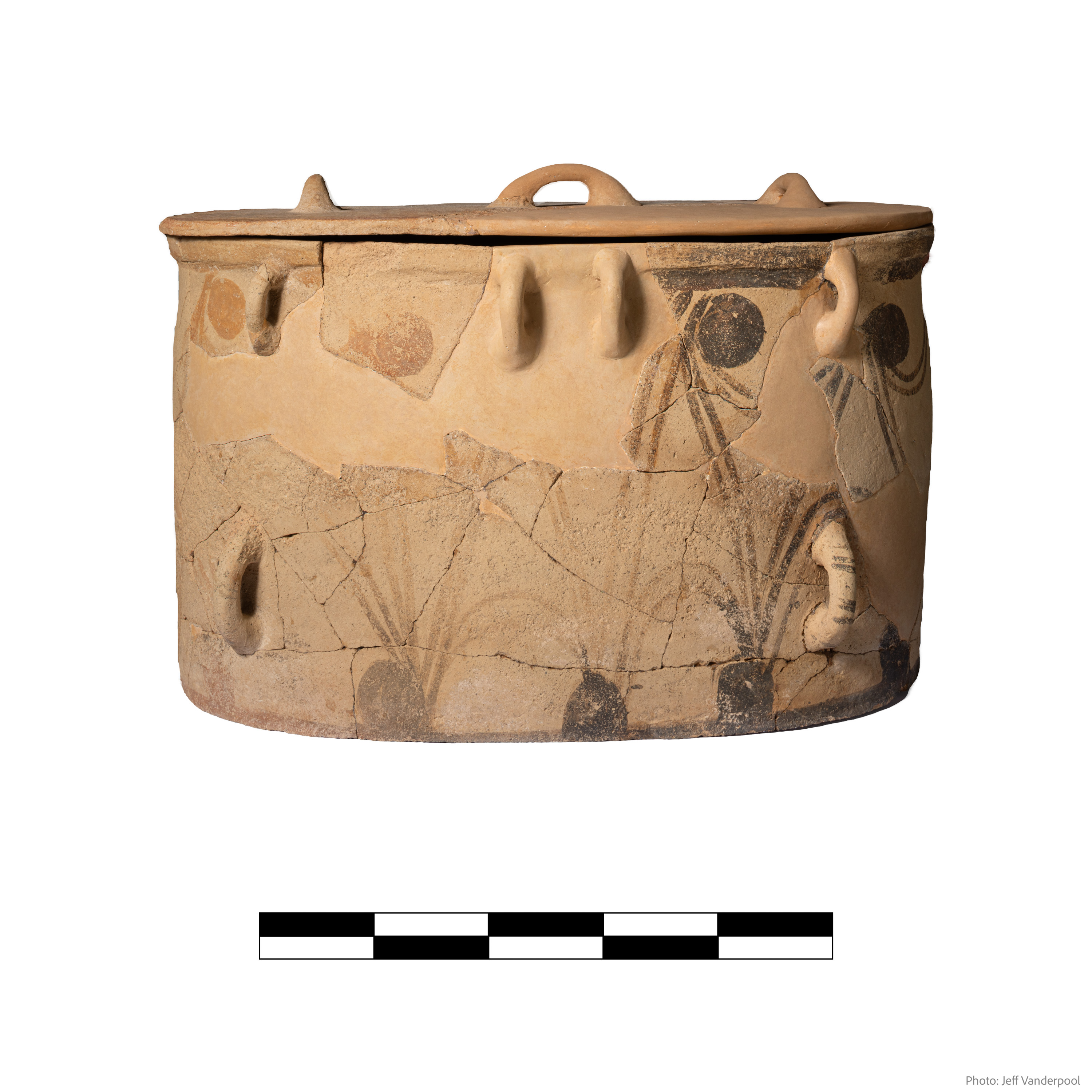
The palatial Minoan settlement of Galatas is located on a hill, Galatiani Kefala, in the southwestern part of the province of Pediada. The evidence from the study of the palace suggests a connection with the central hall of the great Mycenaean palaces, as indicated by the large central hearth surrounded by columns. The Galatas palace has a total area of four acres, along with the external courtyards and the roads, almost as much as the palace of Zakros. The large number of vessels and stone tools found in the palace premises document the development of specialized food preparation activity at an industrial level. The existing east wing was reconstructed, the kitchen was added, paved roads were formed in the southeast, and the west wing was constructed in the central courtyard.
The first parts are estimated to have been built during the Middle Minoan period (1700-1650 BC), while the completed palace complex was constructed a little later, at the heyday of the new palaces (1650-1600 BC). The decline began between 1600 and 1500 BC, and then the complex was invaded by troglodytes. In the following period, the building decayed.
ARCHAIC TO ROMAN PERIODS,
BYZANTINE PERIOD,
PREHISTORIC PERIOD
Gortyna, the most powerful city of Crete, along with Knossos, has been inhabited since the Neolithic period. During the 7th century BC, a sanctuary, identified with Athena Polias’s,was built on the acropolis–in the place of an older one. At the same time, the scattered settlements were probably synoicized in a settlement south of the heights, the center of which was initially the area around the temple of Apollo Pythios. During the Archaic and Classical periods, the agora was created in the area south of the Roman Odeion, and representative buildings or structures were erected, including a circular building that initially bore the famous “Great Code”, a juridical codex of the 5th century BC. During the Hellenistic era, the city, which expands and is fortified, leads the Cretan League, concludes various alliances and is involved in a civil war with Knossos for control of the island. In the mid-2nd century BC, it destroyed and integrated Phaistos into its territory, acquiring exclusive control of the Messara plain and becoming the Crete and Cyrenaica’s capital. It was adorned with many public buildings, which seal the visible urban image today. Among others are the aqueduct, nymphaea, thermae, the Roman theater, the Roman odeion, the amphitheater, and the hippodrome, while older buildings were also rebuilt. During the Early Christian period, the settlement was limited to the Metropolis and Agioi Deka areas.

 PREHISTORIC PERIOD
Organized archaeological site with parking area, ticket office, facilities for disabled visitors, and toilets.
A settlement of the Neo-Palatial period was built on a low hill very close to the sea. It has a palace, which was destroyed along with the city around it in 1450 BC, at the same time as the other Minoan centers. There was a period of “reclaiming” the site, but eventually, theplace was permanently abandoned around 1200 BC.
The palace – the seat of a local ruler –is located on the top of the hill, west of a rectangular courtyard from which several private residences have entrances. It was the centre and perhaps the agora of the settlement. A flight of L-shaped steps is attached on the south side of the palace, facing the courtyard. On these, it seems that spectators sat and watched events of a religious character. The palace’s interior had various official rooms and storerooms above which there would have been larger rooms. To the north of the palace and independently of it, there is a small public shrine dedicated to the Minoan Snake Goddess, accessible from a dead-end road. It is a square (3 x 4 m) room, with a bench on the south side to place cult objects, some of which were uncovered during the excavations: clay figurines of minor goddesses with upraised arms, a three-footed altar, snake tubes, etc.
About 200m from the Minoan city of Gournia at the site of Sphoungaras, about 150 burials in pithoi and one burial in a larnax (coffin) were discovered, dating from the Middle Minoan I to the Late Minoan IA. The pithoi were placed reversed over the contracted bodies of the deceased, while a large number of decorated cups came from the area. North of the settlement of Gournia, a cemetery was found, which included mainly house tombs. A second cemetery with burials in rock ledges and pithoi was located 500 m to the north, where the graves’ large size and contents reveal groups of higher social rank.


 ARCHAIC TO ROMAN PERIODS
Non-organized archaeological site
Near Gra Lygia, two rock-cut chamber tombs containing burials in larnakes (coffins) were discovered. The grave goods included decorated pottery, faience and glass beads, an amulet of rock crystal and bronze tools.


 ARCHAIC TO ROMAN PERIODS
Accessible in various parts of the modern settlement
Hierapetra (Hierapytna) was one of the most important cities of Crete in ancient times. From 145 to 110 BC, it conquered and destroyed Praisos and other cities, imposing its rule on Eastern Crete, except Itanos. Its thrive is evidenced by the minting of silver coins with the head of Tyche, issued in 110-80 BC.
The Roman conquest introduced a new period of growth and prosperity and turned Hierapetra into a commercial and cosmopolitan city. It had luxurious villas with mosaics, a theater, an amphitheater and an odeion, an aqueduct, public baths, a basin for “naval battles”, imposing funerary monuments and was embellished with sculptures of excellent art.
The complete description of the great theater up to now was made by the traveller OnorioBelli. The building that came to light is a typical example of a Roman theater. Six preserved rows of seats were excavated; the drainage channel (euripus) that directed rainwater out of the theater was also found. It datesin the early 2nd c. AD and might have been erected during the reign of Hadrian.


 ARCHAIC TO ROMAN PERIODS
Accessible in various parts of the modern settlement
Traces of facilities of various periods are scattered in the wider area of Kalo Chorio, which must have been an important port at all times. The preserved remains have not been systematically investigated, so it is not possible to identify public buildings or shrines. The temple of Athena Polias is attested in inscriptions. The Roman pottery kiln, found and investigated near the bed of the Kalo River in the area of Kalo Chorio, belongs to the type of vertical kilns. It has two floors and consists of the combustion chamber and the mouth of the stoking channel on the lower floor, the eschara or perforated floor on which the vessels were placed, and the pot-firing chamber on the upper floor. It is circular, about 4 m in diameter and was 3.15 m high when it was unearthed. The kiln was discovered in a remarkably good condition and is one of the few kilns that preserved the eschara and the firing chamber. The site was located within the territory of Lato, not far from its southeastern border, towards Hierapetra.

 ARCHAIC TO ROMAN PERIODS,
BYZANTINE PERIOD
ARCHAIC TO ROMAN PERIODS,
BYZANTINE PERIOD
Non-organized archaeological site
The territory of Itanos flourished during the Classical and mainly during the Hellenistic and Roman periods and had a particularly important maritime and commercial character. The city had two fortified acropoleis and a port, while remains of houses, a temple, and fortification walls have been found inside the “asty”. Itanos was a military base forthe Ptolemies, who had established a garrison from 267/6 to 145 BC. In the wider area of Itanos, the existence of shrines is attested: In the city’s territory, on the cape known as Samonion in antiquity, today’s Cape Sideros was the shrine of Minois or Samonia Athena. Its foundation dates to the mythological Argonautic expedition when Argonauts were forced by a storm to land at Samonion after avoiding the giant Talos, the guardian of Crete, with the help of Medea’s trick. This story is delivered by Apollonius of Rhodes. At the site of Vamies, a small shrine dedicated to Demeter was also found, which would have belonged to the territory of ancient Itanos. It dates from the Archaic to the Hellenistic period. Finally, the cemetery, with successive usage from the Geometric to the Hellenistic period, is situated on a hill north of the city. The basilica of Itanos stands in a prominent position in the settlement of the Early Byzantine period. Recent research has shown that Basilica I was built on a site of pre-existing buildings, some of which were either incorporated into the basilicaor destroyed during its construction. The basilica was built with sandstone and grey limestone blocks, which the craftsmen obtained exclusively from earlier buildings. Four construction or repair phases are identified on the monument.


 PREHISTORIC PERIOD
The systematic research in Kalo Chorafi of Mylopotamos brought to light a building compound of large dimensions and a rather complex structure at the top of a hill. The architectural design is characterized by clearly delimited masonry, which in some cases is preserved at a height of more than 1 m, defining rooms of square or rectangular plan and corridors. Wall painting fragments were found in some of the rooms, sometimes deriving possibly from an upper floor. Two strong walls define the complex to the southwest and northwest. Two phases of use of the building are revealed in some rooms. Pottery dates the use of the site to MM III – LΜ I period. The presence of writing such as Linear A and Cypro-Minoan, as well as metal objects such as gold foils, marks the range of contacts of the Minoan settlement connecting the building complex with overseas routes and the palatial system of Crete.
 PREHISTORIC PERIOD
The settlement of Kalochorafitisis located in Messara, Crete, between the villages of Lagolio and Skourvoula, north of Phaistos. East of the village is the site of Stavros, where four rock-cut chambertombs of the Late Minoan (LM) IIIb period came to light.
ARCHAIC TO ROMAN PERIODS
Accessible in various parts of the modern settlement
It is known archaeologically, mainly from the extensive cemeteries of the Hellenistic and Roman periods. It is considered to be the port of the city of Lato. In the late 3rd/early 2nd c. BC, possibly due to the development of shipping and trade, started to acquire greater power and significance than the inland city, which was gradually abandoned by its inhabitants who moved to the port, a phenomenon known in the modern era. During the late Hellenistic and mainly Roman period, it was a flourishing city of eastern Crete.
The necropolis of Stavros is located southwest of the modern city of Agios Nikolaos and covers the period from the second half of the 3rd c. BC to the 2nd c. AD. The second cemetery of Kamara, Potamos, as it is called, is located north of the previous cemetery, dating from the 1st c. AD, while the third cemetery is situated on a hill in the “Kazarma” site, north of the Potamos cemetery and west of the ancient city. The tombs are divided typologically into four types: tile-covered graves, simple pit graves, cist graves and built graves. The grave offerings indicate a dense communication with the rest of the Greek world, especially with the eastern part of it.

 PREHISTORIC PERIOD
Non-organized archaeological site
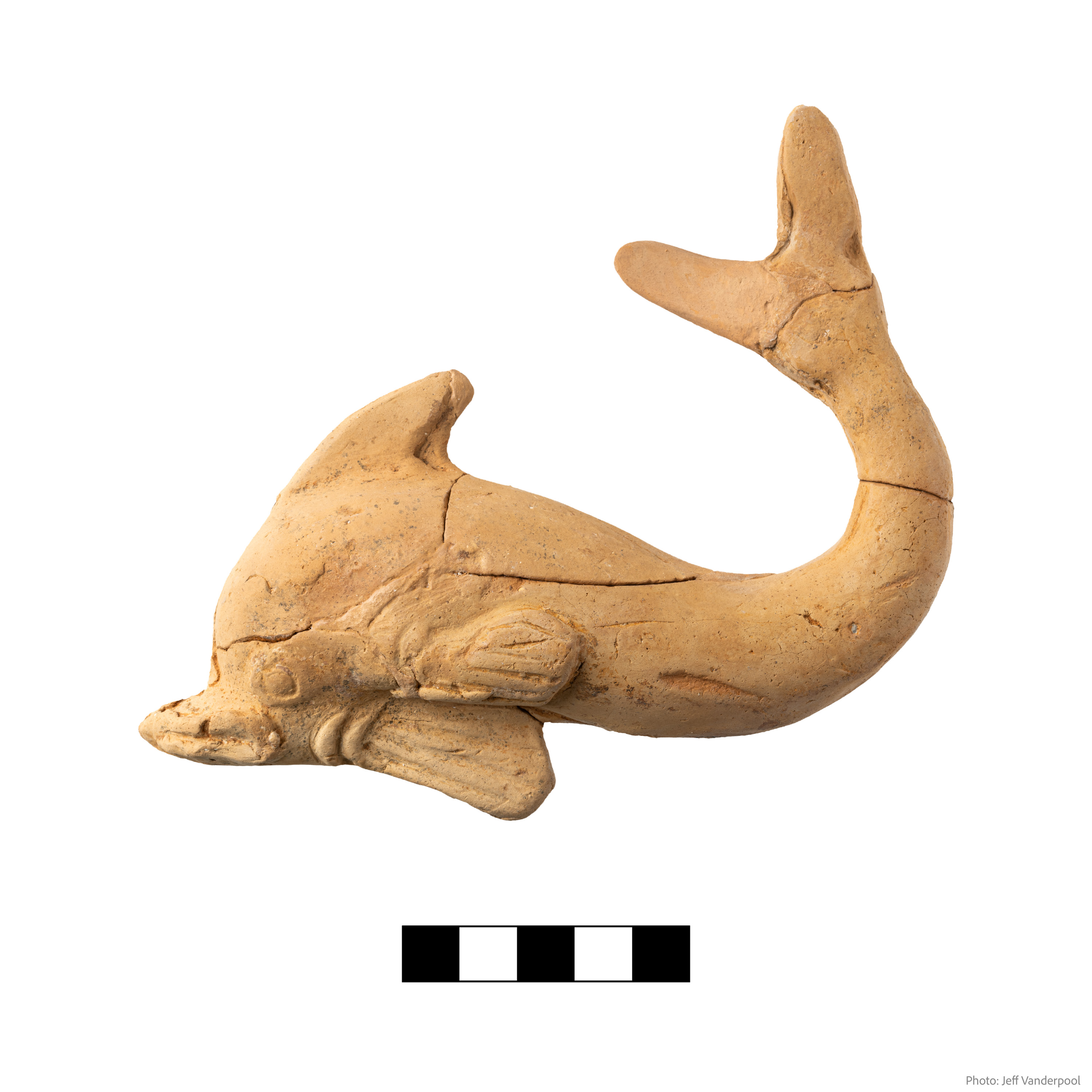
The settlement was created after the fall of the Cretomycenaean civilization, around 1200-1100 BC. It spreads on three high peaks, Karfi, Mikri Koprana and Megali Koprana. Two cemeteries have been identified at Astividero and Mnemata sites. Houses, public buildings and sanctuaries have been found. Among the most important finds of the site are the goddesses’ figurines with upraised arms in a gesture of prayer or benediction, with cylindrical bodies, motionless lower limbs and a bird on the head. A peak sanctuary dating to the Middle Minoan period preexisted in the same area.
One of the most important cemeteries of the LM IIIC period, due to its extent and association with one of the most important refuge settlements, is the cemetery spread on Astividero and Mnemata in Karfi. It consists of tholos tombs with a circular or square chamber, most surrounded by a square-built enclosure. The cemetery is divided into the southern and the eastern parts. The eastern cemetery is located at Astividero, east of Mikri and Megali Koprana, while the larger, southern cemetery is located at Memmata, between Karfi and Megali Koprana.


 PREHISTORIC PERIOD
Non-organized archaeological site
On the bay of Karoumes, at the eastern end of Crete, between Zakros and Palaikastro, two buildings of megalithic construction were excavated, the so-called“Mother Fort” and the“Sea Guard House”, dating to the Neopalatial period (around 1750-1700 BC). The second building shows a picture of a specialized industrial facility for purple processing and dye production. A large amount of shells was found, which appear as a solid layer up to 10 cm thick in some places. Besides, their fragmentary preservation, as well as their breakage necessary for processing, excludes their use as bait or food.

 ARCHAIC TO ROMAN PERIODS,
BYZANTINE PERIOD,
PREHISTORIC PERIOD
ARCHAIC TO ROMAN PERIODS,
BYZANTINE PERIOD,
PREHISTORIC PERIOD
The modern city of Chania is founded on the site of an important ancient Cretan city, Kydonia. The archaeological finds that came to light during the excavations on the coastal hill “Kasteli” and the neighboring district “Splantzia” in the Old Town of Chania represent all the chronological phases of the Minoan civilization. The most significant Early Minoan settlement is located in Chania, with its center on the hill of Kastelli. This settlement is the most important in Western Crete. During the next Middle Minoan period (first half of the 2nd millennium BC), the settlement of Chania developed into a dynamic center. It was destroyed in 1450 BC by a large fire, thus sealing the most impressive architectural remains on Kastelli. Historical Times Kydonia was founded in the place of the modern city of Chania. Architectural remains dating to the Geometric and early Archaic periods (1050-650 BC) have been scarcely identified until today in the city. During the Roman era, it developed into one of the important centers of Crete, which flourished until Late Antiquity. The necropolis of Kydonia has a diachronic continuity from the Middle Minoan period to the Late Antiquity.
Our knowledge of Kydonia of the Early Byzantine period (3rd c. AD – 823) is limited. The Kastelli hill was fortified by nature and was thus chosen early on to protect each settlement. The Byzantine defensive wall has an irregular oval plan, following and complementing the natural relief of the hill along an E-W axis.
PREHISTORIC PERIOD
Non-organized archaeological site
At the mouth of the Cha Gorge, northeast of the village of Monastiraki near Ierapetra, there are the ruins of a settlement called “Katalymata”, located in a particularly inaccessible area. The settlement is situated on multiple (at least eight) natural cliff terraces. There are ruins of at least ten architectural complexes, houses or groups of houses in an area of 3.5 acres. The site served as a “refuge” settlement in various periods of instability,showing evidence of six separate occupation phases. The site’s best preserved (longest and most intensive) occupation dates to the LMIIC (1200-1150BC). The settlement contained approximately a dozen houses; however, structures such as defensive walls were less well-preserved.


 PREHISTORIC PERIOD
Non-organized archaeological site
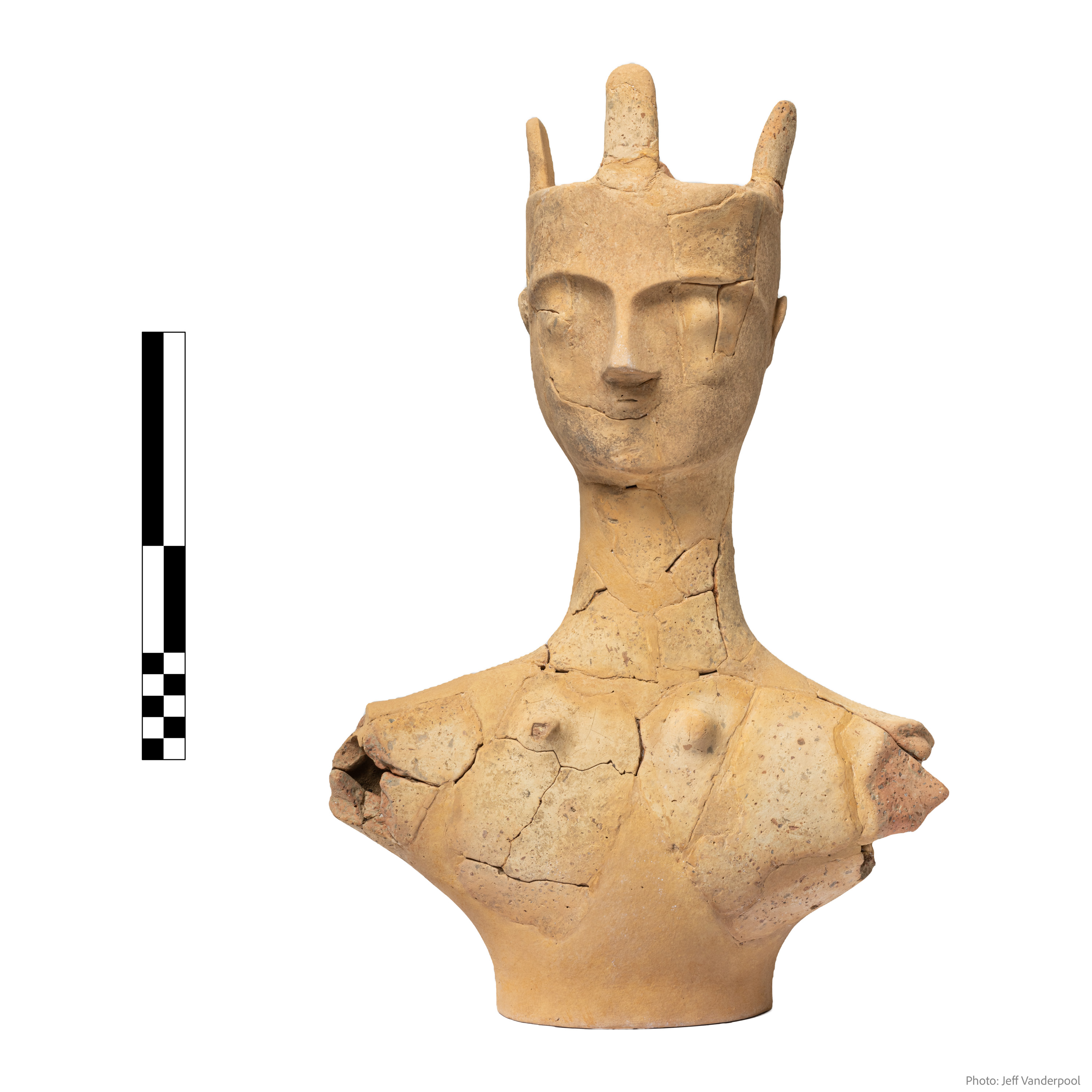
It is one of the most important areas of the Early Iron Age, where there were two settlements: Vronda and Kastro. Vronda was inhabited from the Post-Neolithic to the Geometric period, and a Geometric cemetery with cremation burials was found, while in Kastro, the occupation continued in the Geometric and early Orientalizing period. A small rectangular room with an entrance from the south and a low pedestal along the eastern wall constituted the Archaic shrine of Kavousi with a large statuetteon the pedestal.
Two Geometric tholos tombs, one found intact but looted, are related to the settlement at Kastro. It contained vases, iron weapons, glass beads, etc. At the site of Vronda, a cemetery with tholos tombs, dating between 1000 and 750 BC, was also investigated. Tombs of the same period are also found in other sites in Eastern Crete, such as Praisos and Tourtoulous.


 PREHISTORIC PERIOD
Non-organized archaeological site
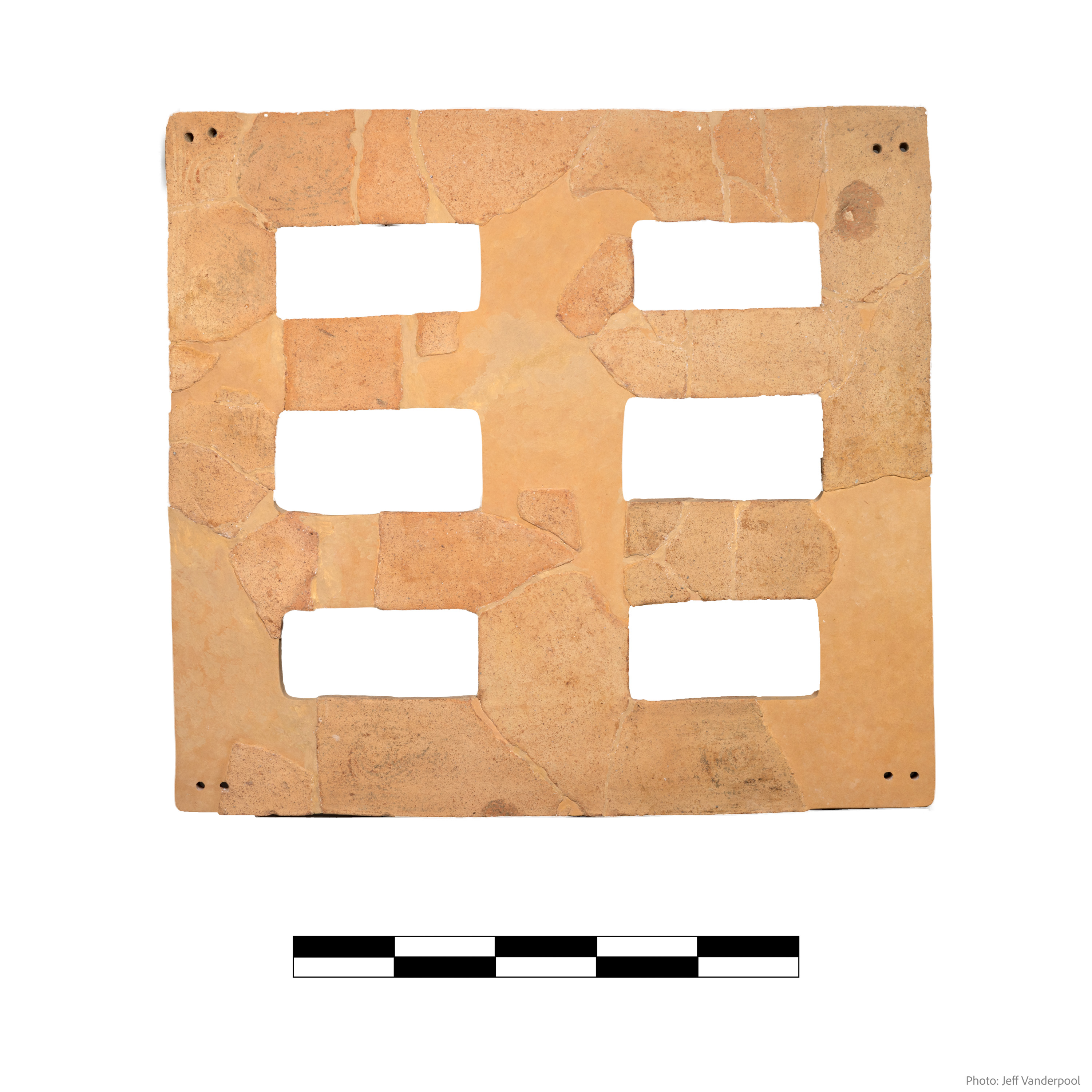
A two-storey Minoan villa was excavated on the modern road from Siteia to Piskokephalo. It was inhabited from 1700 to 1450 BC and belonged to a small network of villas in the hinterland of the Minoan city of Petra.
ARCHAIC TO ROMAN PERIODS,
BYZANTINE PERIOD,
PREHISTORIC PERIOD
Knossos, the most important center of the Minoan Civilization, was continuously inhabited from the late 7th millennium until the Roman times. The Neolithic era is characterized by the stage of technologically advanced rural life (stone tools and loom weights). In the Bronze Age, characterized by the processing of bronze, the settlement development probably continued. However, many older buildings were destroyed during the palace’s construction. In 1450 BC, after the partial destruction of Knossos, Mycenaeans settled in the city without rebuilding the palace.
In the Byzantine period, Knossos was the seat of a bishop, while the remains of a basilica of the 6th c. AD are still preserved. After the Arab conquest of Crete, the port of Heraklion began to acquire greater importance, while Knossos gradually became forgotten. The monuments of the archaeological site are the Palace of Knossos, the Small Palace, the Royal Villa, the Frescoes House, the South House, the Unexplored House of Knossos, the Knossos Guest House and the Royal Tomb-Sanctuary.


 ARCHAIC TO ROMAN PERIODS,
PREHISTORIC PERIOD
ARCHAIC TO ROMAN PERIODS,
PREHISTORIC PERIOD
Excavations at Kommos have revealed a developed port facility. The habitation extends from the Middle Minoan III – Late Minoan I period to Roman times. Minoan houses, monumental buildings, workshops and three sanctuaries comprise the main architectural remains. The variety of imported pottery, especially from the Late Minoan I – IIIB period, suggests international connections, the development of shipping and a busy local port, which some scholars linked to the palace of Phaistos.
A sanctuary of the 10th – 9th c. BC provides a rare series of architectural development and layered pottery deposits, with offerings, mainly animal figurines, from the Protogeometric to the Roman era. In the two early temples open to the east, animal bones serve as evidence of ritual sacrifice. A sanctuary within the second temple, founded in the 8th c. BC, has been identified as Phoenician. The third temple of the 4th century, with its plan similar to that of the older temples of Dreros and Prinias and the later temple of Lissos, helps us identify the main types of Cretan temples unique to Crete.

 PREHISTORIC PERIOD
Non-organized archaeological site
At the sites of Lakoi and Kastellos, a tholos and several chamber tombs were excavated. In the tholos tomb, a pithos burial with cremated remains was unearthed, while in two other chamber tombs, larnakes with cremated remains of adults and children. Remains of Pre-Palatial and Protopalatial occupation were found at the top of Kastellos hill.

 PREHISTORIC PERIOD
Non-organized archaeological site
The cemetery near Krya was used from the late Bronze Age until the Geometric period. Square-built tholos tombs, pseudo-tholoi, chamber tombs and pit graves were excavated, as well as burials in pits opened in the natural bedrock.
 ARCHAIC TO ROMAN PERIODS,
BYZANTINE PERIOD,
PREHISTORIC PERIOD
ARCHAIC TO ROMAN PERIODS,
BYZANTINE PERIOD,
PREHISTORIC PERIOD
The modern city of Chania is founded on the site of an important ancient Cretan city, Kydonia. The archaeological finds that came to light during the excavations on the coastal hill “Kasteli” and the neighboring district “Splantzia” in the Old Town of Chania represent all the chronological phases of the Minoan civilization. The most significant Early Minoan settlement is located in Chania, with its center on the hill of Kastelli. This settlement is the most important in Western Crete. During the next Middle Minoan period (first half of the 2nd millennium BC), the settlement of Chania developed into a dynamic center. It was destroyed in 1450 BC by a large fire, thus sealing the most impressive architectural remains on Kastelli. Historical Times Kydonia was founded in the place of the modern city of Chania. Architectural remains dating to the Geometric and early Archaic periods (1050-650 BC) have been scarcely identified until today in the city. During the Roman era, it developed into one of the important centers of Crete, which flourished until Late Antiquity. The necropolis of Kydonia has a diachronic continuity from the Middle Minoan period to the Late Antiquity.
Our knowledge of Kydonia of the Early Byzantine period (3rd c. AD – 823) is limited. The Kastelli hill was fortified by nature and was thus chosen early on to protect each settlement. The Byzantine defensive wall has an irregular oval plan, following and complementing the natural relief of the hill along an E-W axis.
ARCHAIC TO ROMAN PERIODS
Organized archaeological site, accessible via an asphalt road from Kritsa or by hiking about 4 km. People with disabilities can access the site by car from a particular road leading to a secondary entrance and a viewing area. Wheelchairs cannot be used inside the site due to the terrain’s morphology. Parking area and toilets for disabled visitors are available at the main entrance.
The center of the city-state of Lato is built on the route from central to eastern Crete on a naturally fortified site. The visible architectural remains of the city belong to the 4th and 3rd c. BC, but the finds show it was inhabited as early as the 12th c. BC, while the city seems to have been gradually abandoned by its inhabitants, who moved to its port, Kamara. It was built on a double acropolis, while the residential areas were spread on the terraced slopes of both hills. The city was protected by retaining walls and “fortress houses”. In the saddle between the two acropoleis, well-preserved stonework of public buildings, such as the Agora and the Prytaneion, have been unearthed.
The ruins of the city’s main temple are preserved on the slope of the southern acropolis. The temple is approximately 4 m high; it has a rectangular pronaos and a square cella, in which the cult statue stood on a base preserved in its original position, although the inscription of the base does not indicate the identification of the worshipped deity. The protecting deity of Lato was Eileithyia, in whose sanctuary public documents (decrees) were displayed. Between Agios Nikolaos and Elounda, in the border area of the ancient polis (city-state) of Lato and Olous, there was a sanctuary dedicated to Aphrodite, the “Ancient Aphrodision”. When the conflicts between the two cities escalated, the temple dedicated to Ares and Aphrodite was built in the 2nd c. BC on the approximate site of the ruined single-roomed Geometric sanctuary.


 ARCHAIC TO ROMAN PERIODS
Non-organized archaeological site
The temple is located in the southern part of the island. Its crepis is preserved, and it has a central entrance onthe narrow east side and a second, stepped access on the north. The temple is greatly destroyed due to the use of its building material to construct the nearby lighthouse. Near the northwest corner of the temple, two large pieces of a colossal cult statue were found, representing a deity seated on a throne.
The theater of Leuke is located on the homonymous islet, 3.6 nautical miles southeast of Crete in the Libyan Sea. It was built on the island’s northwest coast, approximately 90 m from the present coastline and is oriented to the north.
The theater, with a capacity of 1000 spectators, was built in the 2nd c. AD. The koilon (cavea), almost semi-circular in shape, has twelve rows of seats. The orchestra is slightly larger than a semicircle. The stage building (skene) includes a proskenion and paraskenia. The entrance to the theater was through the vaulted passages at the sides. The theater today is buried under the sand.
 ARCHAIC TO ROMAN PERIODS,
BYZANTINE PERIOD,
PREHISTORIC PERIOD
ARCHAIC TO ROMAN PERIODS,
BYZANTINE PERIOD,
PREHISTORIC PERIOD
Ancient Levena was a port in the modern bay of Lenta, on the southern coast of the prefecture of Heraklion. The bay is surrounded by two capes, Leon to the west and Psamidomouri to the east. North of Leon, at the location “Aginaropapouro”, remains of an Early Minoan settlement were found, which must have belonged to important tholos tombs that came to light at the sites “Papoura” and “Gerokampos” west and “Zervos” east of the cape. Historical period Levena appears in the late 6th – early 5th cBC. In its chronological course, it is always in a direct relationship or dependence on neighboring Gortyna, whose port it was. The city has been known since the mid-4th c. BC, when the well-known from ancient sources Asklepieion of the city was founded at the foot of a hill in the northern part of the bay. During the Hellenistic period, the sanctuary, under the control of Gortyna, experienced its first phase of flourish, while, from 160-180 AD, when it was entirely rebuilt, it reached its zenith. The majority of the building remains of Levena that have been uncovered, as well as the cist graves, constitute the only evidence so far for the cemeteries of Levena during the Roman period. As the ancient city extended into the Lentasbay, and probably further west, as indicated by the remains of a Hellenistic farmhouse found in Gerokambos, it is reasonable to assume that the cemeteries extended beyond the Psamidomouri cape, in the eastern periphery of the city, in the area of the tombs described.

 ARCHAIC TO ROMAN PERIODS
Lissus (Lissos) was the League of the Oreians seat, a political and economic alliance of autonomous cities. The issuing of a particular gold coin of the League by Lissusin the early 3rd c. BC verifies its position in the league. Although the coastal city was small, it was simultaneously a political center, a port and the most important religious pole in the region. The Asklepieion is built under the imposing rocky landscape next to the famous sacred thermal spring, which is still gushing. The small temple of Asclepius, a building of the Hellenistic period, contains proxeny inscriptions on its facade. The mosaic floor preserved in its interior was added during its reconstruction in the Roman period. Asclepius of Lissos healed women’s fertility and thus became the protector of infants. Today, the remains of the ancient pier, port structures, a Roman period theater infra structure, and the small vaulted graves on the western slope of the valley are visible.
ARCHAIC TO ROMAN PERIODS,
BYZANTINE PERIOD,
PREHISTORIC PERIOD
On the northern foothills of Mount Dikti, at the passage from Pediadato Lasithi, 1 km NE of the modern village of Lyttos, on a hill 656 m high, lie the remains of one of the strongest and probably the oldest city of Crete. It is ancient Lyttos or Lyktos, which many Greek writers, including Homer, mention. The visitor sees today in the archaeological site a later phase of the settlement, dating from the Classical to the Roman periods, during which the city flourished. Lyttos was probably a residential center until the 7th c. AD. Homeric Lyttos, identified with the ru-ki-to of the Linear B tablets of Knossos, has not yet been located.

 ARCHAIC TO ROMAN PERIODS,
PREHISTORIC PERIOD
ARCHAIC TO ROMAN PERIODS,
PREHISTORIC PERIOD
Μη οργανωμένος αρχαιολογικός χώρος
Makrigialos, due to its excellent geographical location, seems to have been inhabited since the Minoan period and was occupied during the early Archaic times. During the Roman period, a flourishing settlement extended west of the bay but probably also on the coastal front.
At the site of Plakakia, a Minoan villa was found, which is a miniature palace and dates to the late Neo-Palatial period (1480-1425 BC). A large central courtyard is in the middle of the building complex. Rooms with paved floors and walls covered with mortar are arranged around the courtyard, while there is also a western courtyard. The villa was destroyed by fire.
West of the inlet (bay), an extensive building complex consisting of rooms arranged around a central courtyard was unearthed, as well as a cistern to which a marble-covered (reveted) staircase led. The existence of mosaics and bathing facilities with a hypocaust was also found. The complex must have been used from the 1st c. BC to the 3rd c. AD.


 PREHISTORIC PERIOD
Organized archaeological site with parking area, ticket office, cafeteria, facilities for visitors with disabilities, and toilets.
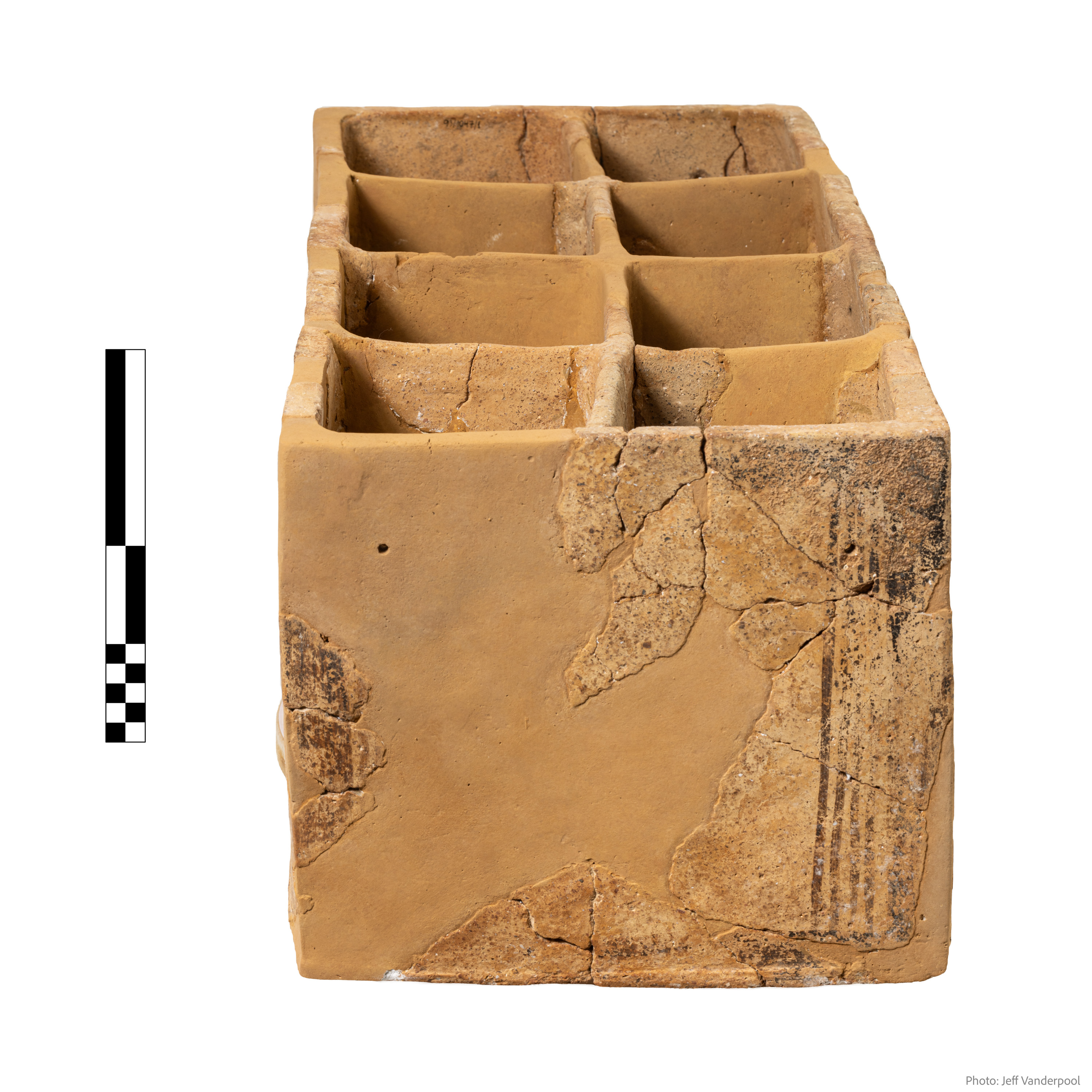
The palace complex was first built in 1900 BC, over earlier habitation remains, and was destroyed in 1700 BC, along with the other palatial centers. It was rebuilt around 1650 BC, in the same place, with the exact dimensions and following the same general plan, to be permanently destroyed in 1450 BC. Limited habitation was found to have existed during the Postpalatial period. The palace of Malia has a well-organized space planning. Built around the central courtyard, each wing has specific areas and spaces with a distinct function. Most remains visible today belong to the Neopalatial complex, while part of the first palace is visible northwest of the complex. The most important and largest part of the palace was the two-storey west wing, which included areas of a religious character, reception and official events halls and extensive warehouses.
A large staircase led to the upper floor, where the living areas of the complex’s tenants must have been. The official halls occupied the northwestern part of the palace complex. In the south wing, which was also two-storey, there were quarters or guest rooms, a small sanctuary and the monumental paved south entrance of the palace. In the north wing and behind the stoa of the central courtyard is the hypostyle hall, with six pillars inside, supporting the banquet hall on the upper floor. The east wing was occupied almost entirely by fluid depots. In the southwest corner of the palace complex, eight circular structures, originally roofed, probably served as granaries. Around the palace extends the Minoan city, one of the most important in Crete. Of the quartiers and individual houses that have been excavated so far, the most important is Quartier M. Its buildings were erected around 1800 BC and destroyed by fire in ca. 1700 BC, at the same time as the first palaces and the other quartiers of the city.
The Horn Sanctuary
Southwest and near the palace of Malia lies the so-called Sanctuary of the Horns (1800-1700 BC), a semi-basement complex with various rooms, the most important of which is located on the northeast side and has an entrance marked by large sacred horns of plaster.
The necropolis of Chrysolakkos
The Protopalatial necropolis of Chrysolakkos, 500 m north of the palace, is a burial complex with small rectangular rooms serving as burial chambers. In one of them, the famous jewel with the bees was found.


 ARCHAIC TO ROMAN PERIODS
Non-organized archaeological site
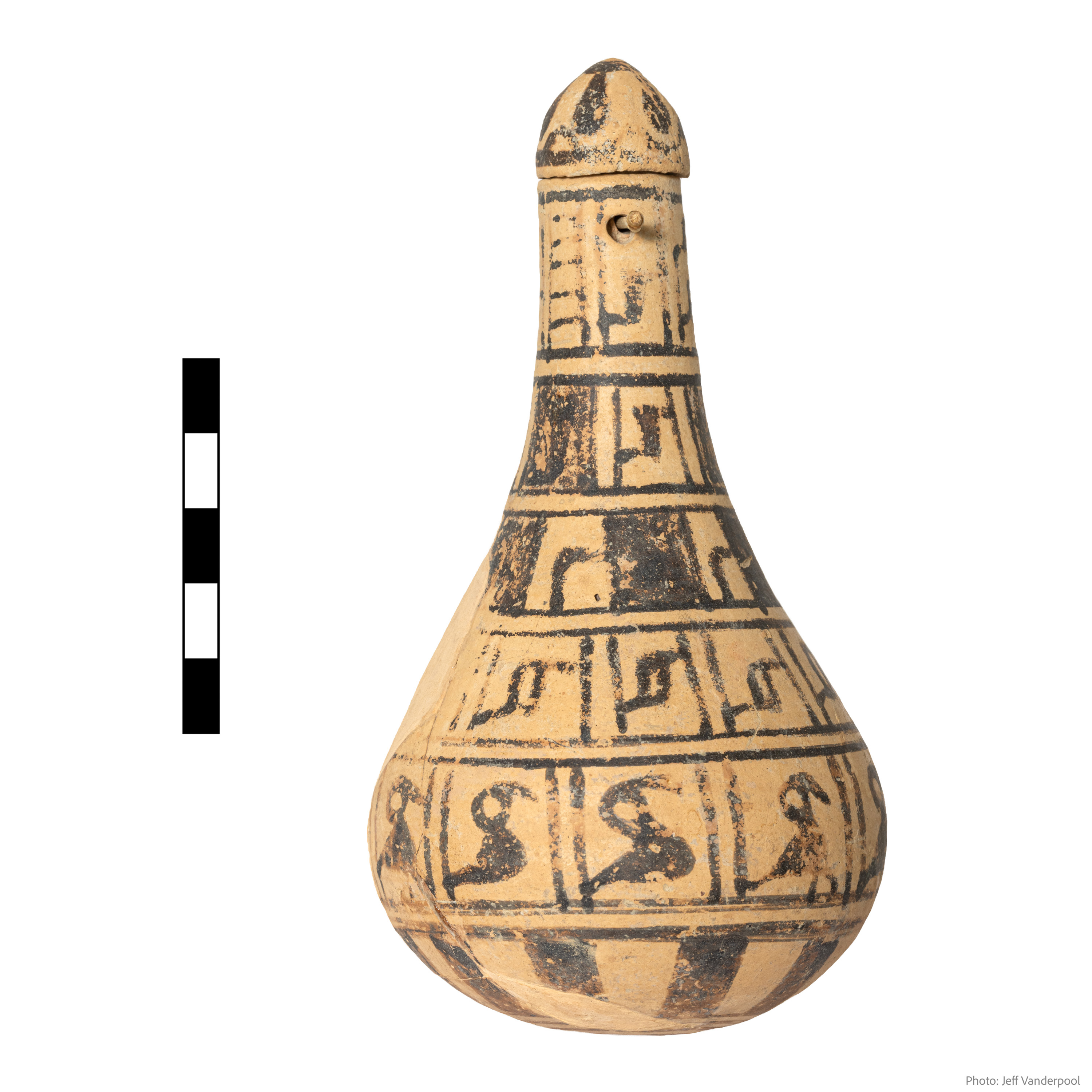
The ancient city of Oleros was located where the modern village of Meseleri (a corruption of its ancient name) near Ierapetra is located. It belonged to the inhabitants of Ierapytna,wherea great festival took place in honor of Athena Oleria. It is mentioned by Stephanus Byzantius as well as in inscriptions. Individual jar burials of adults in pithoi or children in smaller vases were found in the Meseleroi, in the Late Geometric-Early Orientalizing period cemetery.

 PREHISTORIC PERIOD
Non-organized archaeological site
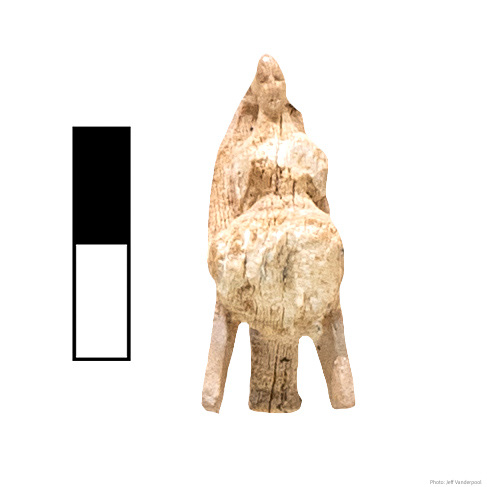
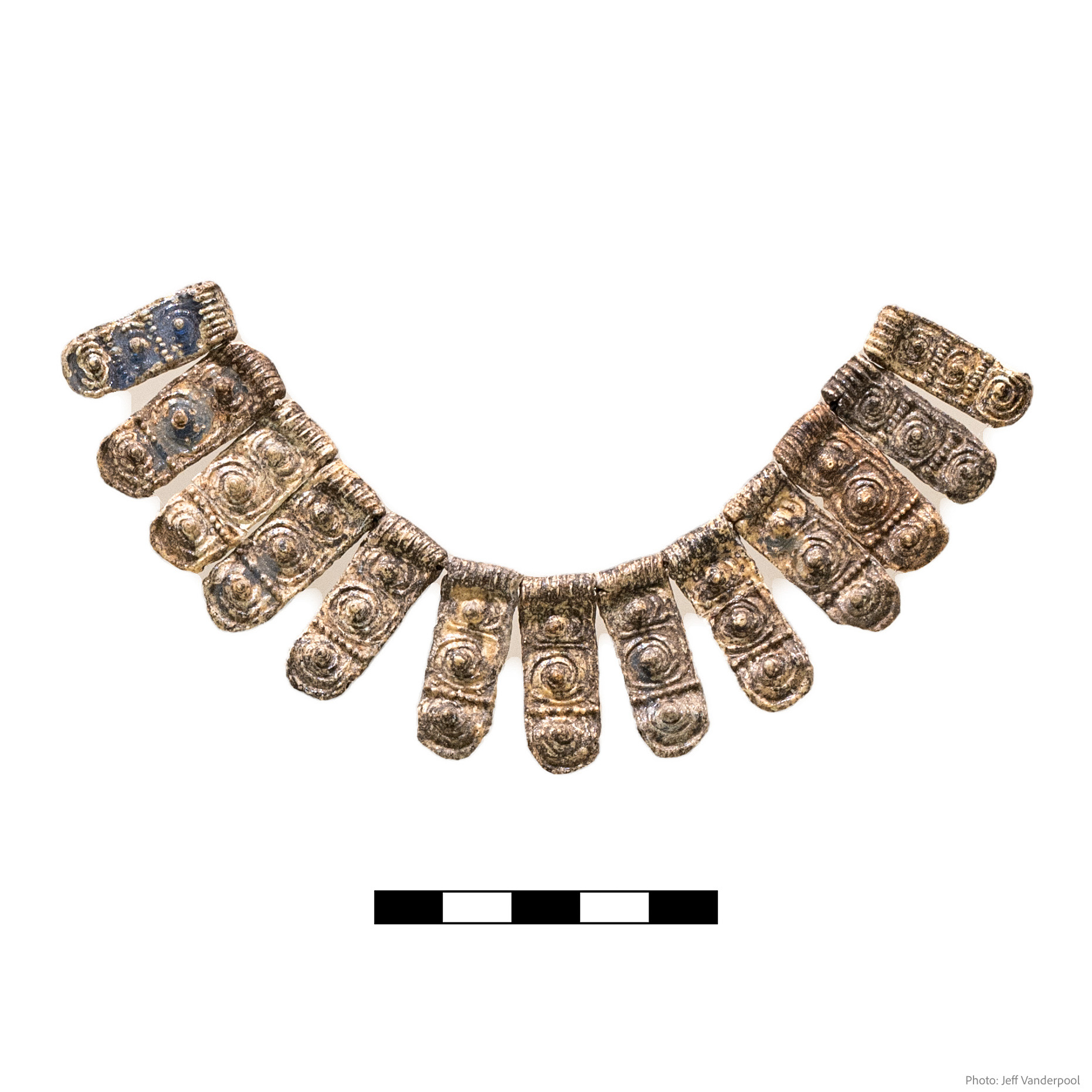
At the site of Kastellos, a settlement, an acropolis, and the Mycenaean and Geometric cemetery remains have been found. Settlements have also been discovered at Kastria and Chalassies (1400-1070 BC). In LM IIIA, the cemetery of Milatos begins to be formulated at the site of Agios Fanourios, on the northern coast of the province of Mirabello. It consists of rectangular chambered tombs with rich grave offerings, which contain burials in elaborately decorated cist and tub larnakes. The Milatos’ chamber tombs include medium and small-sized graves. Their dromos (the entrance passage) was rudimentary, eccentrically placed to the chamber, and the entrance of the tombs was sealed with a dry-stone wall. The cemetery is associated with the migrant settlement east of Agios Fanurios, on Kastellos Hill.


 PREHISTORIC PERIOD
Non-organized archaeological site
Mochlos is a small islet, mentioned as Scoglio de muflo on Venetian maps, while locals call it Agios Nikolaos after the small church standing on it. An extensive and significant Minoan settlement with a harbor developed on this island, becoming one of the Minoan civilization’s most important centers. As a commercial trade center, it supplied obsidian from Melos and raw materials from the East to the rest of Crete.
In the pre-palatial cemetery, used until the early Neo-Palatial period (until about 1600 BC), the most important tombs were monumental, built like houses and had rich burial offerings such as gold jewelry, seal stones and stone vessels. In the Pre-palatial cemetery of Mochlos, built tombs with multiple burials were excavated. Some burials were found in rockshelters or pit graves, and a few in pithoi.


 PREHISTORIC PERIOD
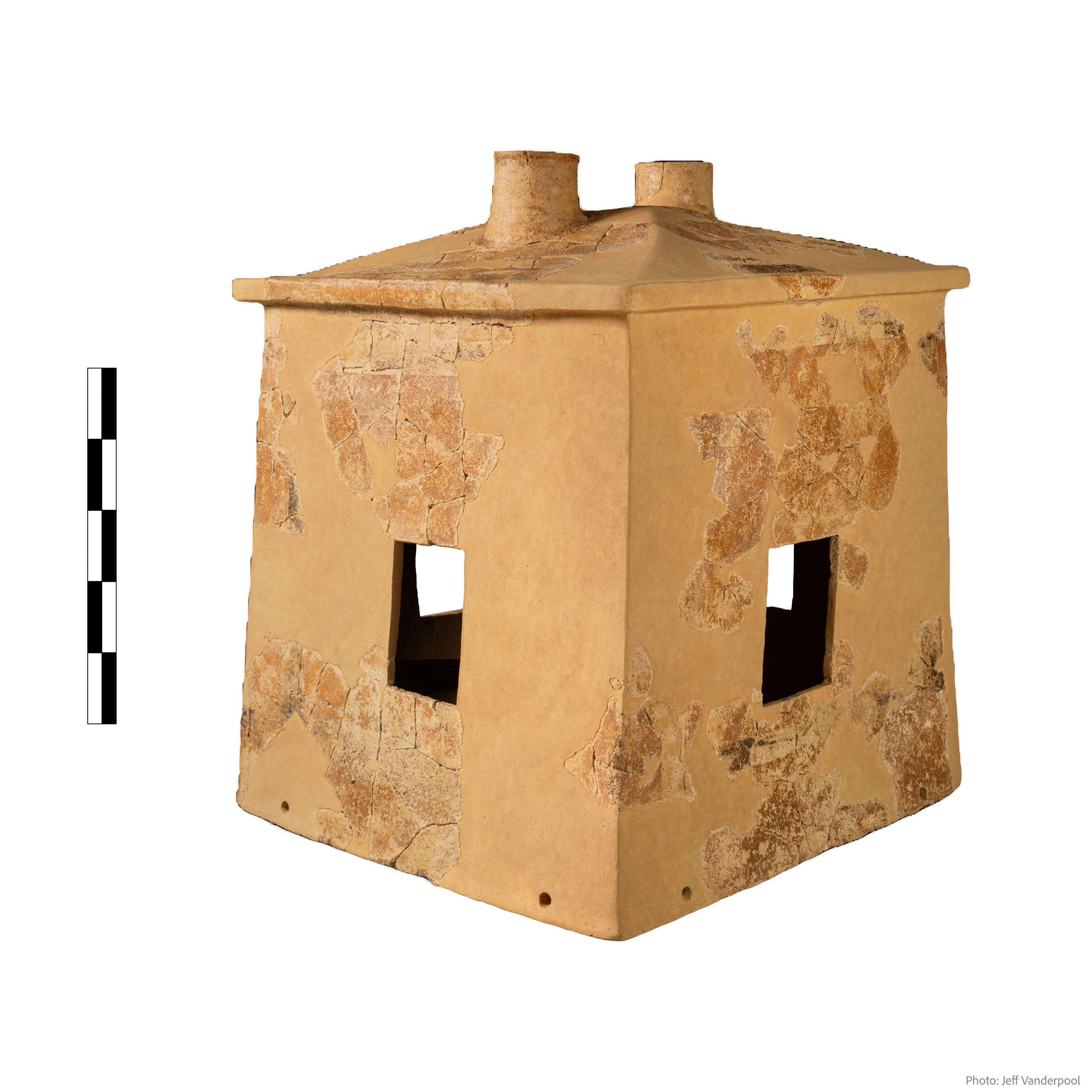
It is a large residential complex of palatial character, founded in a geographically advantageous location, with a range of life from the beginning of the Protopalatial period to 1700 BC, when an earthquake and a subsequent fire destroyed it. In the center of the area dominates the natural rock of Charakas, where evidence of religious use was found. The buildings are developed around a central, open space with various uses. Halls of megalithic construction with palatial architectural features have been revealed. An important find constitutes the clay model representing a two-storey building from which the upper floor is preserved almost entirely with a flat roof and cornice, openings, doors and windows. At least two sealings archives, i.e. parts of clay bearing imprints of seals, which initially sealed the rims of pithoi and other vases, handles of boxes and doors, sacks, etc., were unearthed in the area. Subsequently, after completing the transactions, they were archived under the control of the records and the management of the products. These seals demonstrate the palatial character of the settlement and its correlation with Phaistos, where a corresponding, extensive archive has been found.
PREHISTORIC PERIOD
Accessible in various parts of the modern settlement
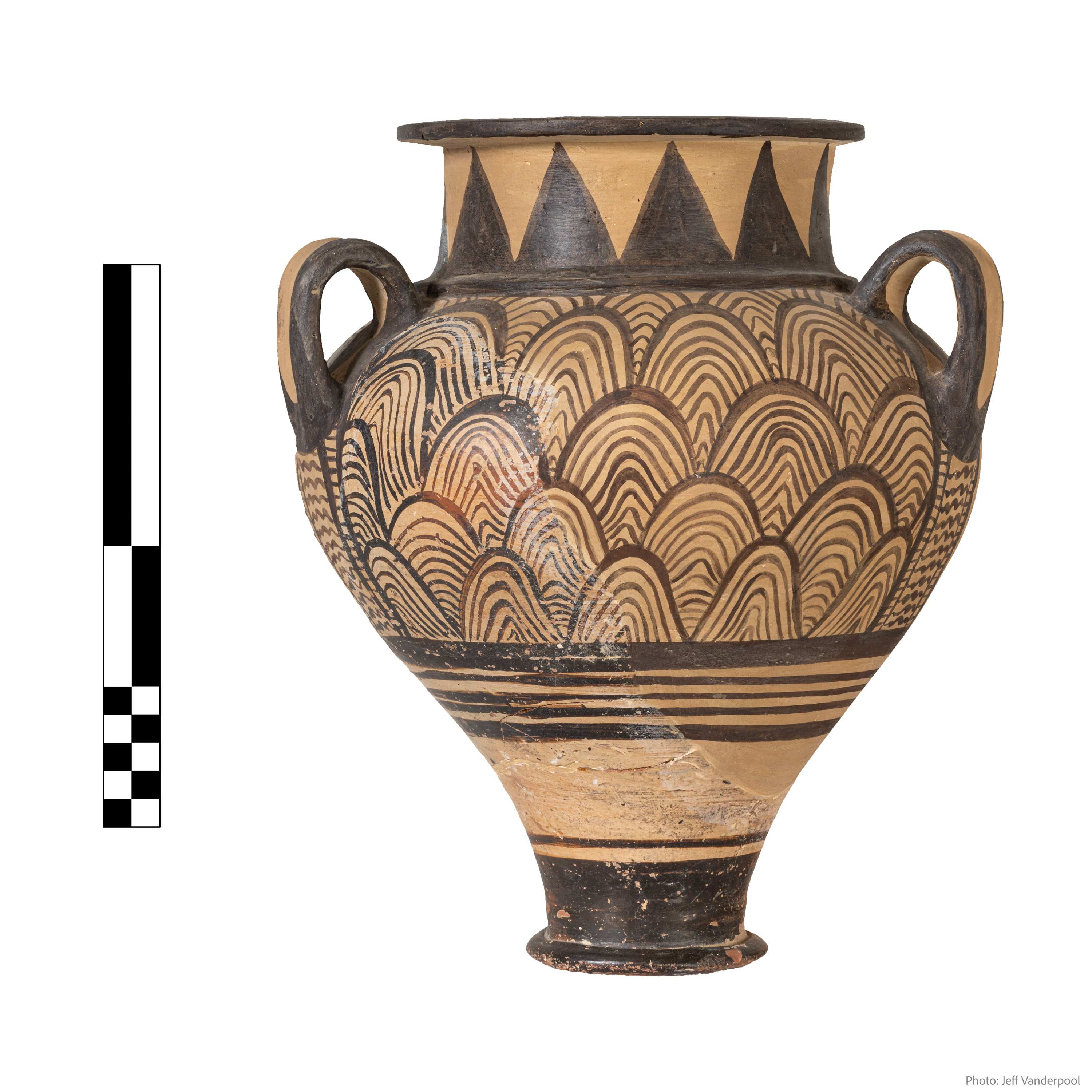
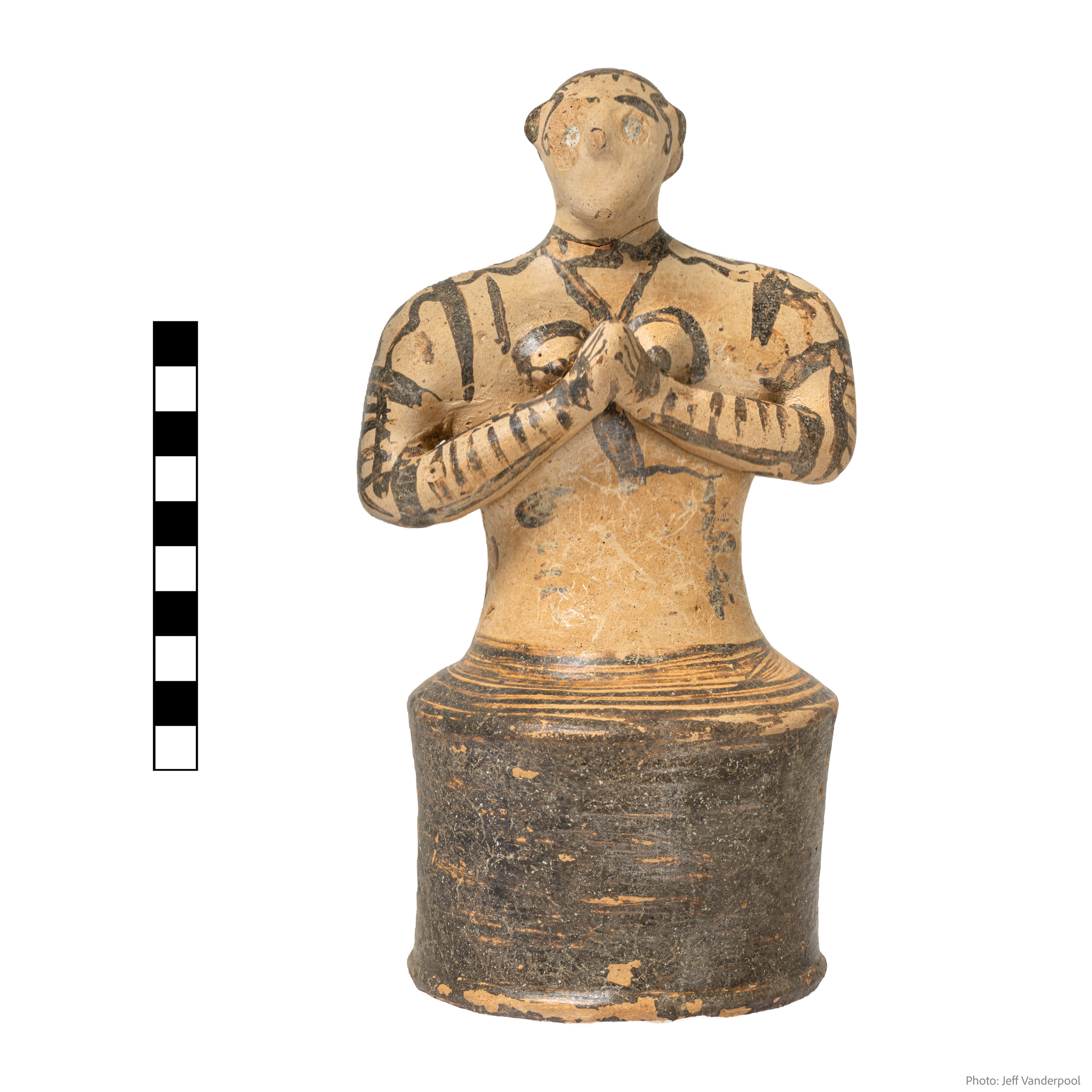
The Asprospilia site at Myrsini, a cemetery with chamber tombs dating to the 14th and 13th c. BC was investigated. The deceased were buried on the floor or in larnakes and were accompanied by several grave offerings. A terracotta figurine interpreted as a supplicant, ceramic and stone vessels, bronze objects, triton shells and beads were included in the graves.
 PREHISTORIC PERIOD
Non-organized archaeological site
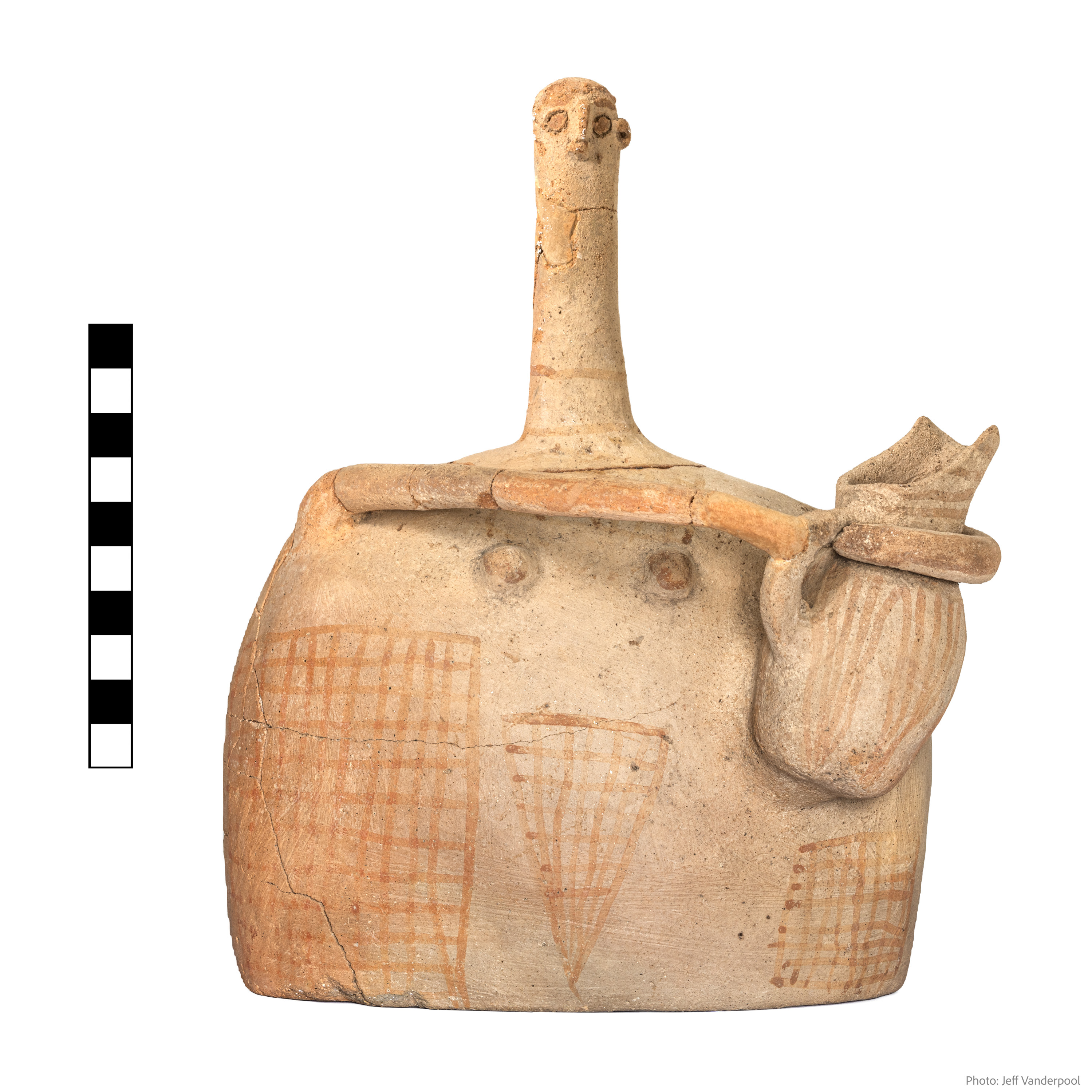
The hill “Fournou Korifi (or Koriphi)” is located near the settlement of Myrtos. A large settlement of the Pre-Palatial period (2600-2300 BC) has been excavated in the area, with a circular defensive wall and two entrances. It consists of six or seven houses clustered together, with storerooms, kitchens and workshops, such as the so-called “potter’s workshop”, where eight pottery wheels were found. The inhabitants were engaged in fishing, trade, animal husbandry and agriculture. A domestic sanctuary of the Pre-Palatial period has been found in the settlement of the Fournos Korifi hill, consisting of three rooms included in a building complex. The cult objects and figurines attest to its religious use. The most significant find is a libation vase, known as the “goddess of Myrtos”, which schematically represents a female figure holding a vase in her arms.

 PREHISTORIC PERIOD
Non-organized archaeological site
The Minoan settlement at Pyrgos flourished slightly later (2200-1500 BC) than the settlement of Fournou Korifi. The settlement’s most important and imposing building was built on the top of the hill – very close to the estuary of Myrtos River – and was conventionally described as a “country house” or “villa”. Based on the archaeological evidence, the “country house” seems to have functioned as a center for the concentration and redistribution of agricultural production, as the most important building of the site and the surrounding area, as well as a local religious center. On the steep hill at Myrtos Pyrgos, a large communal tomb was built in the Middle Minoan period, partly on the ruins of an ancient settlement.
 ARCHAIC TO ROMAN PERIODS,
BYZANTINE PERIOD,
PREHISTORIC PERIOD
ARCHAIC TO ROMAN PERIODS,
BYZANTINE PERIOD,
PREHISTORIC PERIOD
The extensive settlement, organized in quartiers, was founded towards the end of the Middle Minoan period. From the settlement, House I, belonging to the architectural type of the Minoan villa, is open to visitors. It follows the palatial standards with paved floors, a polytheron and an upper floor. The building construction and the pottery indicate two phases, which must belong to the Middle Minoan III/Late Minoan I period (1600 BC). Apart from the Minoan settlement, included in the archaeological site, other antiquities of various periods (Minoan, Classical, Hellenistic, Roman and Early Byzantine) have been identified and excavated in the wider area of Nerokouros.
 PREHISTORIC PERIOD
East of Heraklion, just after the Vathianos plain and almost on the highway to Agios Nikolaos, lies the site of Nirou Chani or Kokkini Chani, otherwise known as Armylides. It is an almost square two-storey villa with an area of 1,000m2 and 40 rooms, built with dressed stones by the sea. During the excavations, four large sacred bronze axes were found. This fact, combined with the large number of religious objects in the process stage, indicates that the site was a workshop of a Minoan high priest who made sacred objects available to the faithful. At Agioi Theodoroi, about 700 m west of the Nirou villa, traces of a small Minoan settlement and its port have been found.
The building flourished in the 16th c. BC and was destroyed in the 15th c. BC. It had two entrances, a paved courtyard, warehouses, workshops, a sanctuary, a small staircase and apartments.
PREHISTORIC PERIOD
The site lies 150 m north of the Odigitria Monastery. There, a complex of two PM circular tombs with annexes was found. In particular, a pit ossuary, five rooms with a square ground plan for burials and offerings, a paved courtyard with a built altar, an independent small room and a peribolus in the NE were unearthed. The grave goods date mainly to the PM II – MM IB period. Along with AgiaTriada and Platanos, it is one of the richest cemeteries in Messara.
 ARCHAIC TO ROMAN PERIODS,
BYZANTINE PERIOD,
PREHISTORIC PERIOD
ARCHAIC TO ROMAN PERIODS,
BYZANTINE PERIOD,
PREHISTORIC PERIOD
Non-organized archaeological site
Olous was one of the most important city-states of Eastern Crete. The city’s economy, which minted its own coins, was based on trade and partly on piracy. It seems to have remained relatively prosperous during the Roman and Early Christian periods. Within the territory of Olous, a strong fortification on the Oxa hill and two small forts have been found that controlled the passages to the city. In the urban center, houses, an open-air sanctuary and a deposit have been discovered, while the extensive cemetery of the city was located in the nearby settlement of Schisma.
A seaside cemetery was excavated with burials in larnakes, clay sarcophagi, and pithoi, all buried in the earth or in natural cavities. A few burial gifts accompanied the burials. This is the earliest appearance of the burial custom of cremation in Crete. It dates from the Late Minoan IIIA to IIIB.
The Hellenistic cemetery of Olous was located near the city, approximately at the site of the modern coastal settlement of Schisma, and was in continuous use from Classical to Roman times.
The sanctuary of Vritomartis has been suggested to be located east of Poros on the Spinalonga peninsula. The protecting deity of Olous was Zeus Tallaios, the god to whose sanctuary the treaties and laws of the city were displayed. The deposit was used from the late 7th to the 5th c. BC. It is located near the eastern rocky coast of the peninsula. It was a main deposit and a group of small ones on terraces between rocks and crevices in the rocky ground. The excavated area coverers an extent of 20m long and 7m wide at its maximum.
At the site of Poros, the remains of a basilica were unearthed. It is a three-aisled basilica with a semi-circular niche on the east side and a trapezoidal narthex on the west, almost equal in width to the main temple. Colonnades separated the aisles. Built-in benches were found in parts of the inner side of the long walls. The floor of the central aisle was covered with mosaic, while the floor of the side aisles was covered with stone slabs of an irregular outline.


 PREHISTORIC PERIOD
Non-organized archaeological site
The use of the cave dates from the Protopalatial to the early Postpalatial period. It is one of the few known caves of the 2nd millennium BC; however, it is not clear whether it was of a cult or mainly a funerary character. The cave settlement was used with neighboring caves and accommodated activities of preservation, storage and processing of products and possibly seasonal habitation.
 PREHISTORIC PERIOD
Non-organized archaeological site
The best-preserved cemetery of pithos burials was excavated in the area. The cemetery, located on the beach of Pacheia Ammos, contained 213 jar burials and six larnakes, all placed inverted in the sand.
 PREHISTORIC PERIOD
Organized archaeological site
At the northernmost end of the eastern coast of Crete, there is a Minoan settlement, which flourished during the Late Minoan period (1550-1220 BC) but remains of the Early Minoan and Middle Minoan periods (3000-1550 BC) have also been discovered. A reoccupation took place in 1300-1200 BC. The city was unfortified and densely populated. The settlement is crossed by a main road, while larger and smaller paved and often stepped streets, perpendicular to it, dividing the city into nine districts (quartiers). The excellent drainage system is distributed to all the districts.The houses along the main road have imposing facades.
The sanctuary of Zeus Diktaios,which belonged administratively to the city of Itanos, was situated NE of Palaikastro. The cult was continuous from the Geometric (8th c. BC) to the Roman period.In the 6th c. BC, a temple was erected in the place of the open-air sanctuary, which was destroyed and rebuilt many times. An inscribed stele dating to the 3rd c. AD was found on the site, preserving the Hymn to Zeus Diktaios, constituting an invocation to the god.


 PREHISTORIC PERIOD
Non-organized archaeological site
The first main phase of the settlement is attested by the finds of the MMII, which indicate the foundation of a Protopalatial settlement. The pottery, archaeobotanical and zooarchaeological remains provide interesting diet and local economy information. The discovery of a substantial amount of crushed murex shells for producing purple dye and loom weights indicates that dyed textiles were one of the inhabitants’ occupations. The settlement was destroyed in the late Protopalatial period, as were many sites in the area. The Neopalatial settlement at Papadiokampos is geographically divided by three streams into four unequal sectors, in each of which a house has been excavated. The characteristic distinguishing it from other Neopalatial settlements is the distance between the houses and the presence of walls around them.


 PREHISTORIC PERIOD
Non-organized archaeological site
Papoura was a settlement dating to the Post-Palatial – Geometric periods (possibly identified with the ancient Dattalla or the city of Eronos or Erannos). East of the site, a cemetery of the same period was excavated with tholos tombs and deposits of an open-air Geometric sanctuary, with black sacrificial soil in crevices in the rocks. A clay hearth for rituals was found next to the deposits. A large number of animal bones, rich pottery, fragments of ritual vessels and a lot of clay figurines, mainly bovine and a helmeted head, and four bronze figurines, three bovines and a bird, were found in the sanctuary area.
PREHISTORIC PERIOD
Organized archaeological site, only for groups after contacting the Archaeological Museum of Siteia.
In the organized coastal settlement of the Minoan period of Petras, Siteia, there are indications of habitation already from the late Neolithic period (3500 BC). Its existence was continuous until 1450 BC, when it was destroyed, like the other Minoan centers, with a small recovery during the Late Minoan III period (1400-1300 BC). The settlement flourished during the Protopalatial period, when a central building of palatial character was constructed on the top of the hill; it reached its peak in the Neopalatial period when many building alterations took place.
The city occupied the entire hill and surrounded a central building. A cyclopean wall with three towers (5x5m) was revealed at the foot of the hill. The large two-storey houses were free-standing, built on terraces, and accessed through paved streets, one of which led to the main building. Storerooms and workshops were on the ground floor, while the main living quarters wereon the upper floor.
In the 12th – 13th c. AD, a cemetery was developed on top of the hill from which several graves have already been excavated.
 PREHISTORIC PERIOD
Non-organized archaeological site
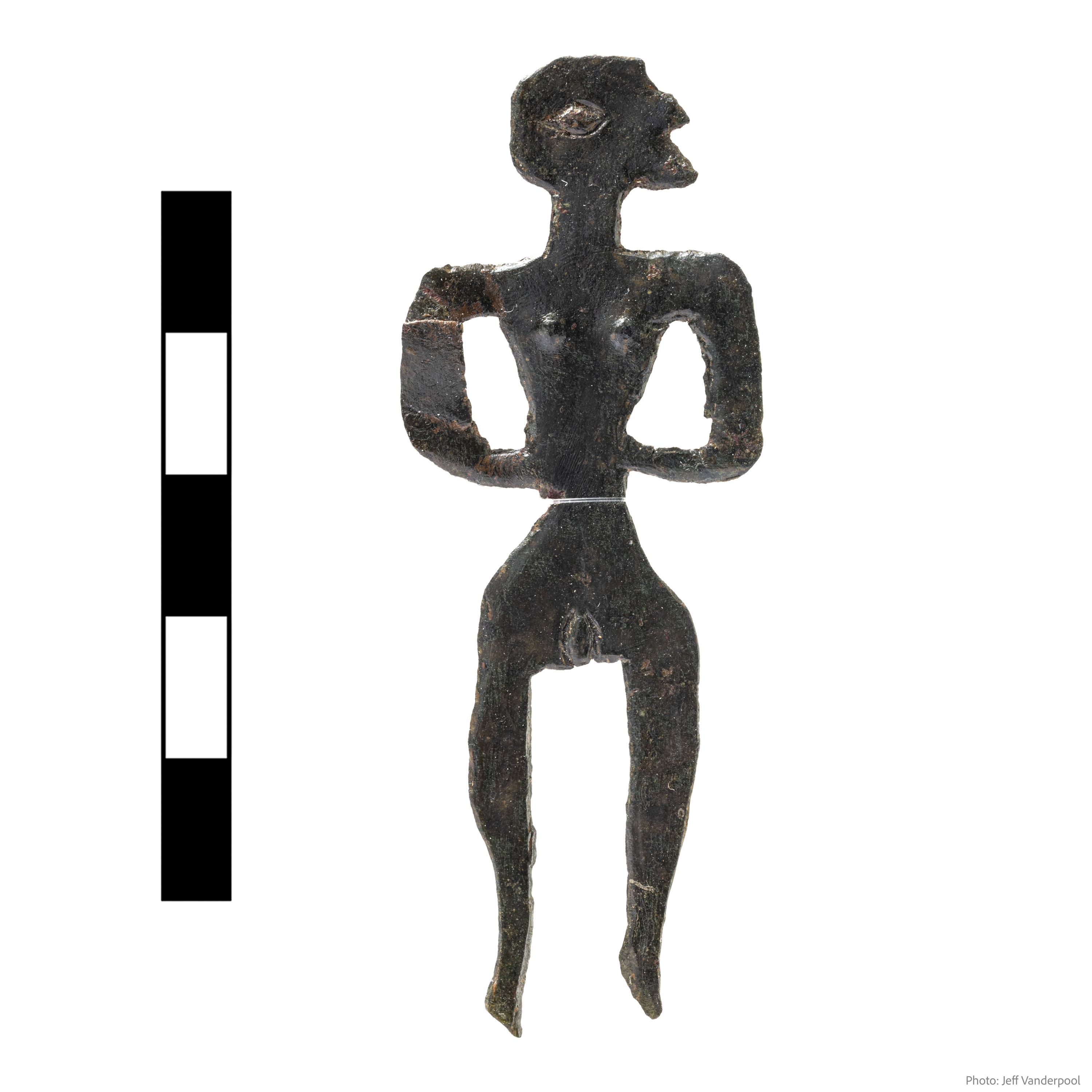
The sanctuary of Petsofas was related to the Minoan city of Palaikastro. It was founded in the late Pre-Palatial period and was used until the Neo-Palatial period. A peak sanctuary with an enclosure and numerous figurines of human parts were found, as well as two offering tables with Linear A script.


 ARCHAIC TO ROMAN PERIODS,
PREHISTORIC PERIOD
ARCHAIC TO ROMAN PERIODS,
PREHISTORIC PERIOD
Phaistos was the second largest palace center after Knossos, as it occupies an area of 18 acres. The palace, bearing the basic features of Minoan architecture, has been destroyed and repaired twice. After new destruction around 1700 BC, its remains were levelled, and the newer palace was erected on them, lasting until ca. 1450 BC.
In the west wing, the large hall is of interest. It is a hypostyle hall with marble revetments and a triple portal towards the central courtyard, with perhaps religious use. In the same wing, there are other rooms related to worship. The central courtyard preserves its paving, dating to the Protopalatial period (1900-1700 BC). Only a small part of the east wing is preserved, which includes a room with skylights and a lustral basin.
In the north wing are the “royal quarters”. The sanctity and solemnity of these rooms are highlighted by the external wall to the central courtyard, which is split with protrusions and recesses in a symmetrical arrangement, correlated to the half-column framed central entrance, as well as the stepped altar located at the corner between the north and west wings. A long corridor and internal courtyards give access to a complex of rooms and a larger courtyard with a ceramic furnace in the center.
A hypostyle “banquet hall” may have existed on a floor overlooking the central courtyard. The official rooms occupy the rest of the wing. Two halls with luxurious construction are distinguished, framed by skylights, balconies and a large peristyle courtyard. Apart from the palace, residential complexes and a temple of the Archaic period, perhaps of Rhea, have been excavated towards NE and SW of the site.
Finds from the palace are exhibited in the Heraklion Museum, such as the famous Phaistos Disk, the extensive Kamares ware collection,bearing various colorful decorations, and many more.
 PREHISTORIC PERIOD
Ancient Phalasarna is located at the western end of the Gramvousa cape, on the west coast of Crete and was one of the most important cities of Crete during the Hellenistic period. It was named after the nymph – local heroine Phalasarna. Habitation traces in the area go back to the Minoan era. However, the cemetery’s finds attest to the city’s organization in the Archaic period (early 6th century BC). The 4th and 3rd c. BC constituted a time of prosperity for Phalasarna, which became a powerful naval force on the trade routes of the western Mediterranean; it was fortified, adorned with temples and public buildings and issued coins. Phalassarna was a pirate base that the Romans eventually destroyed in 67 BC. Its cemetery includes burials in pithoi, pits on the ground, and cist- and rock-cut graves in the natural ground, dating from the Archaic to the Hellenistic period.
PREHISTORIC PERIOD
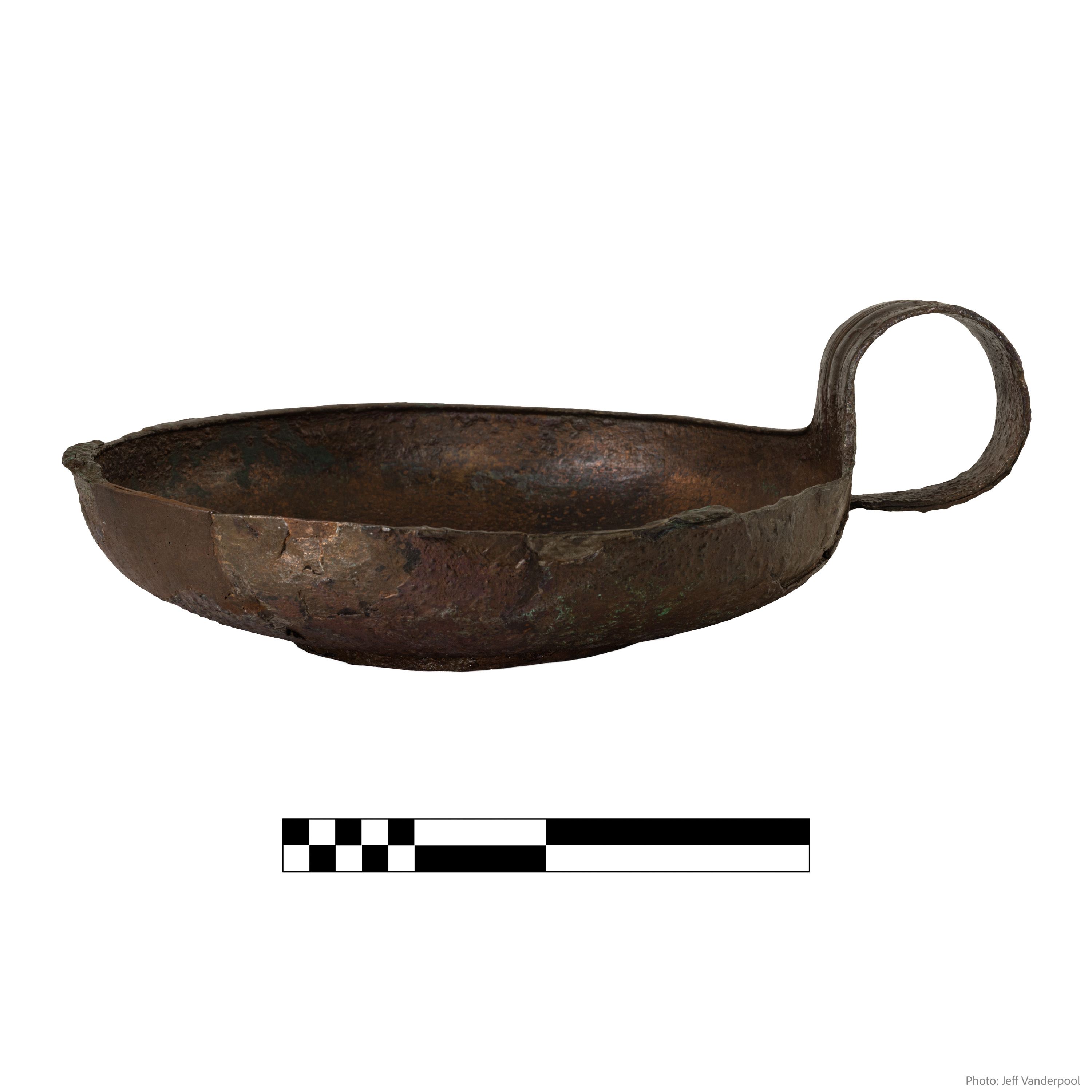
The almost square chamber of carefully carved limestone slabs measures 3.40 x 3.65 m, 12.40 m2 area, and 3.80 m high. All four sides converge to construct its pyramid-shaped roof, built in the known corbelling masonry. The superstructure of the dome lacks a few stones in the keystone part, from which the tomb was looted at an unknown time.
PREHISTORIC PERIOD
Non-organized archaeological site

 PREHISTORIC PERIOD
Non-organized archaeological site
The declared archaeological site of “Plati” is near the homonymous village in the Lasithi Plateau. It extends on two hills, on “Apano” and “Kato” Kephali. On “Kato Kefali”, during excavations conducted by Dawkins in the early 20th c., a settlement with three different habitation phases, LM I, LM III and Archaic, was partially uncovered. The largest MM settlement in the area was discovered on “Apano Kephali”, in which the occupation seems to have continued during the LM period.

 ARCHAIC TO ROMAN PERIODS,
BYZANTINE PERIOD
ARCHAIC TO ROMAN PERIODS,
BYZANTINE PERIOD
Polyrrhenia was one of the most important city-states of Crete during the Hellenistic period, built in the hinterland of the modern province of Kissamos. As its port, it had Kissamos, a city and a port, in its absolute influence. It is strategically located on the slopes of a natural fortress, 418 m high.
Defensive walls surrounded the ancient city, a significant part of which is preserved today, while on the acropolis lies a Byzantine fortress.
Going up to the acropolis is the church of the 99 Holy Fathers of the late 19th c. AD. A particular feature of the church is the use of ancient stones and inscriptions dating from the 3rd to the 1st c. BC for its construction. Significant archaeological remains of a monumental altar or a Hellenistic temple of the 4th c. BC, probably dedicated to Artemis, have come to light. Inside the acropolis are also discernible the remains of an Early Byzantine basilica. Remains of temples and sanctuaries have also been identified outside the fortification walls.
 ARCHAIC TO ROMAN PERIODS
Non-organized archaeological site
The city extended in two neighbouring hills, separated by a col, conventionally called “Acropolis A” and “Acropolis B”. It flourished from the Archaic to the Hellenistic periods. South of the settlement, there were exurban sanctuaries. Strabo connects the Praisioi with the pre-hellenic Eteocretans, whose territory Praisos occupied a central position. According to epigraphic evidence, the city was at its peak during the Hellenistic period. The finds include clay votive reliefs and figurines. An important sanctuary was on a third hill, south of the first ones, the so-called “Altar-Hill” or “Acropolis C”. The city’s cemeteries were located southeast of the latter.


 PREHISTORIC PERIOD
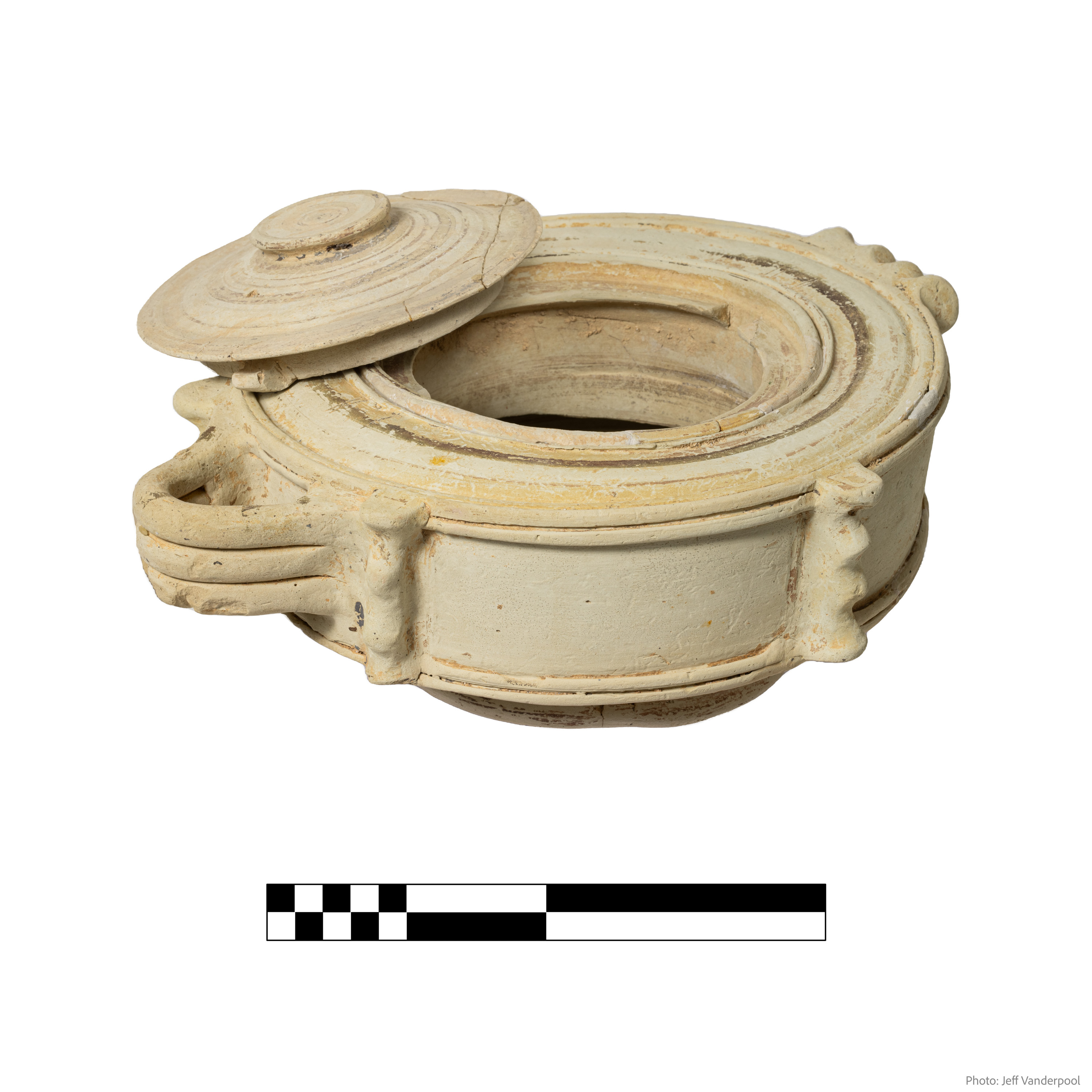
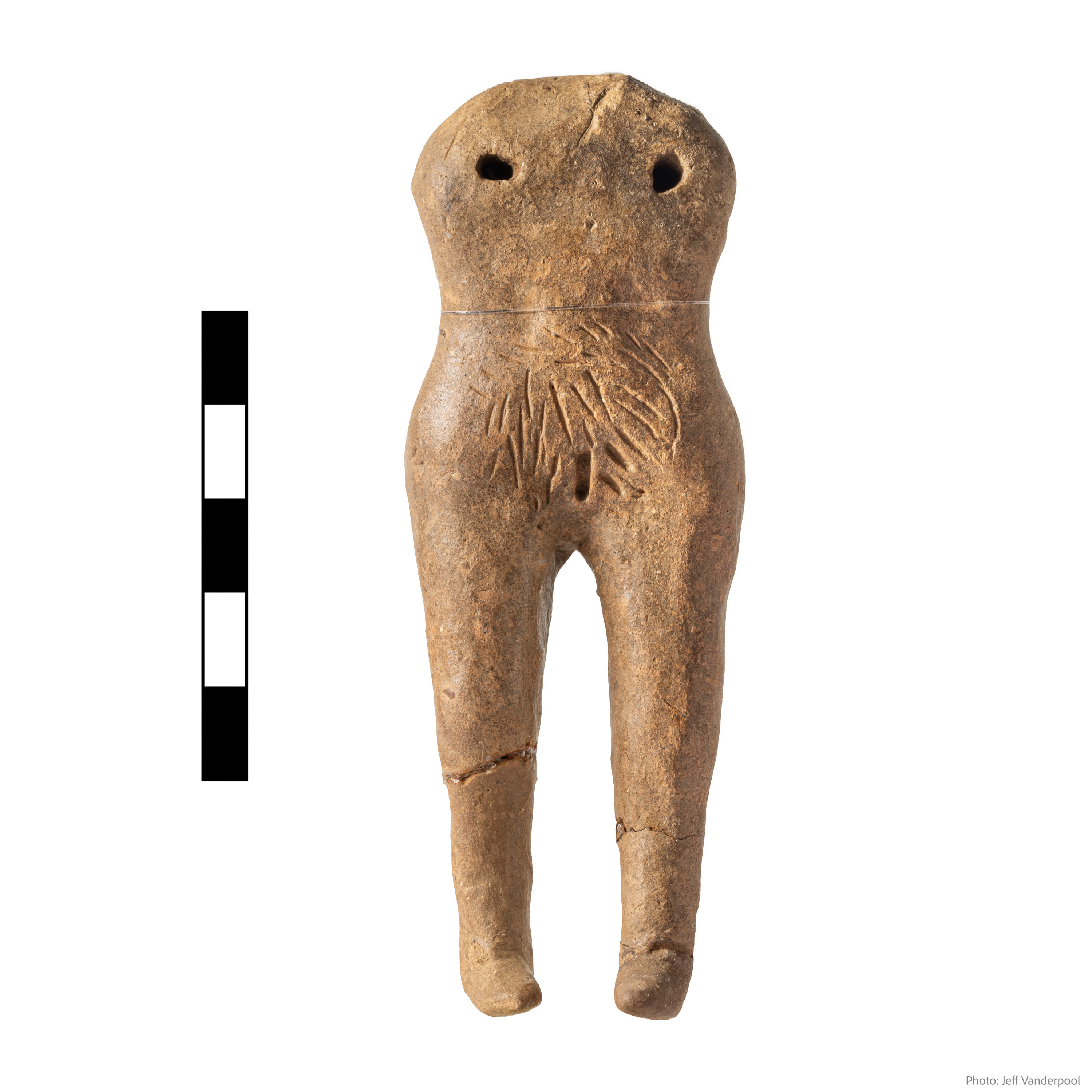
In an open-air sanctuary, a large number of votive offerings were found, including anthropomorphic figurines of excellent manufacturing quality, distinguished for the anatomical shaping of their parts and the variety of female hairstyles. Unusual for shrines of this category is the number and size of scarabs (1650-1500 BC).

 ARCHAIC TO ROMAN PERIODS,
BYZANTINE PERIOD,
PREHISTORIC PERIOD
ARCHAIC TO ROMAN PERIODS,
BYZANTINE PERIOD,
PREHISTORIC PERIOD
Non-organized archaeological site
It was part of a much larger harbor settlement extending to Kampos and Panteleimon Island. It involves five millennia of occupation, from the Neolithic to the Venetian/Ottoman period. The archaeological finds reveal that it was a center of industrial production for pottery and later for metallurgy, as kilns were found. The port’s location appears vital along the west-central coast of Mirabello Bay.
 ARCHAIC TO ROMAN PERIODS,
PREHISTORIC PERIOD
ARCHAIC TO ROMAN PERIODS,
PREHISTORIC PERIOD
Non-organized archaeological site
Pseira is a small island on the Mirabello Gulf’s eastern side. It had a substantial settlement in only two historical periods, the Minoan Bronze Age and the Early Byzantine period.
A settlement dating from the Pre-Palatial to the Neopalatial period was excavated on the island’s eastern side, part of which was later occupied by a Roman settlement. The Minoan settlement has the characteristics of a commercial center with contacts in the wider eastern Mediterranean region. The island seems to have had the same character and role in Roman times. Underwater research in the area has brought to light pottery from 1700 BC, estimated to be the cargo of the earlier known Minoan shipwreck.
The cemetery is remarkable for its grave types diversity. The deceased were buried in cist graves, small tombs made of stones, house tombs and pithoi. The burials were communal, a common custom in Minoan cemeteries. The study of pottery from Pseira has led to interesting observations on maritime trade routes and local production, dating from the 5th to the 9th c.


 PREHISTORIC PERIOD
Οργανωμένος αρχαιολογικός χώρος με χώρο στάθμευσης, εκδοτήριο εισιτηρίων, καφετέρια, υποδομές ΑΜΕΑ, χώρους υγιεινής. Προσβάσιμος με σύντομη ανηφορική πεζοπορία
The Cave of Psychro was identified at the beginning of its investigation with the famous Diktaion Andron of the ancient tradition, the cave Rhea fled to give birth to Zeus, the father of gods and men, away from the child-killer Cronus. For an exceptionally long period, from about 1800 to the 7th c. BC, it was one of the most important cult places in Crete. Pilgrims from the wider region and distant places arrived here to pay tribute to the worshipped deity and dedicate their offerings. Bronze male and female figurines depicting the dedicators in typical worship poses, bronze tools, knives, axes, razors, blades, seals and fibulae were found inside the cave.


 PREHISTORIC PERIOD
Non-organized archaeological site
At the site of Kephali, locally known as “Buffo”, a Minoan settlement of comparable importance to Malla was unearthed. During the peak of the Malians (2000-1750 BC), Kephali was a humble settlement, probably in the shadow of the imposing Malia palace. Around 1750 BC, the settlement seems to have become more important. On the north side of the hill, there is a necropolis, used from the Pre-Palatial (around 2500 BC) to the early Neopalatial period (around 1750 BC).


 ARCHAIC TO ROMAN PERIODS
Non-accessible archaeological site
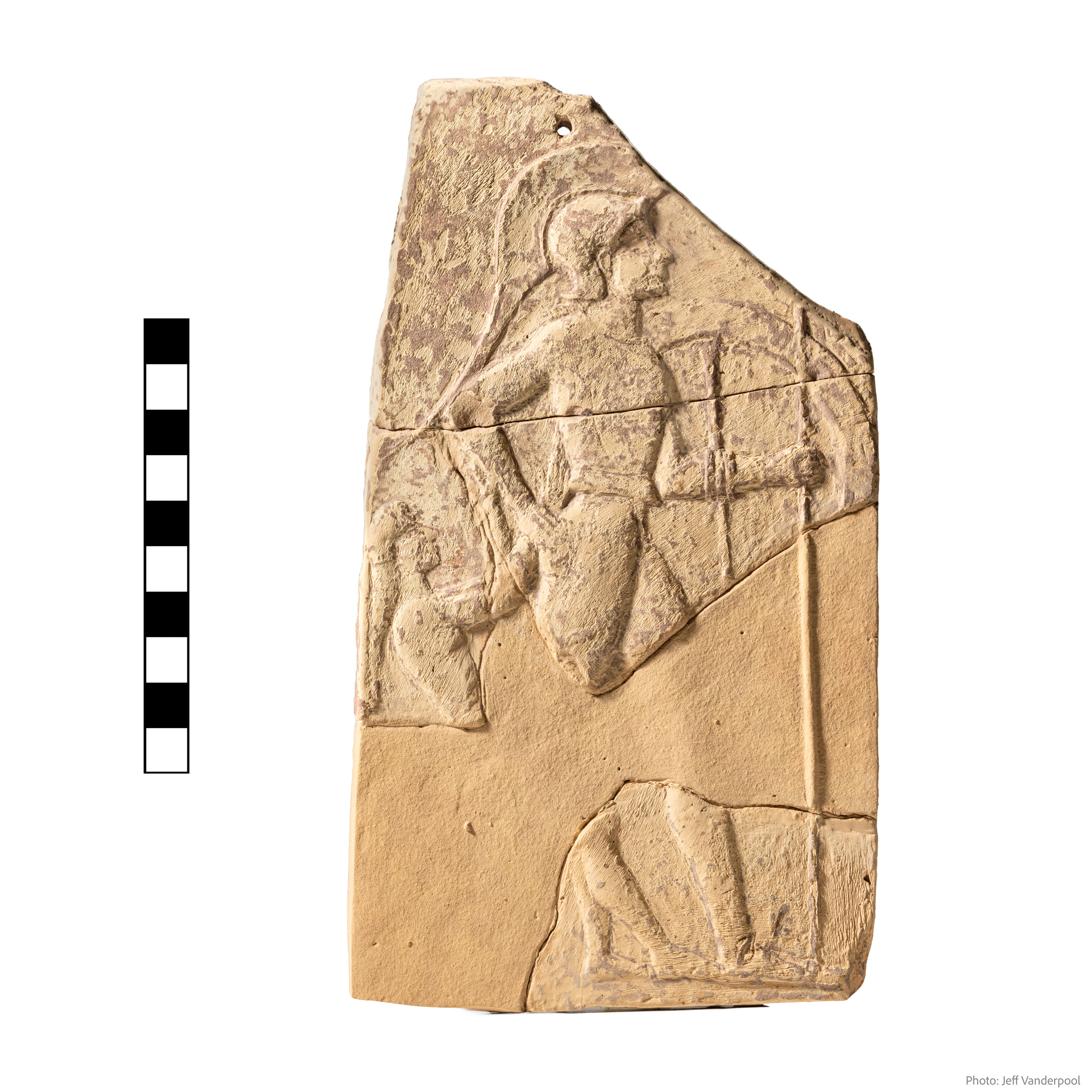
An important deposit with numerous finds, mainly figurines and relief tiles dating to the 7th c. BC was discovered in Siteia. Based on the type of these finds, it belonged to a sanctuary dedicated to a female deity of fertility and prosperity. In the figurines, influences from Egypt and Mesopotamia can also be detected.
 PREHISTORIC PERIOD
Non-organized archaeological site
Two ellipsoidal chamber tombs were found at Farmakokefalos, containing numerous burial offerings: clay vases, bronze objects, seal stones, beads and clay spindle whorls. Tomb A had an ellipsoidal chamber used for eight burials. Tomb B was larger (2.30 m in diameter), while the dromos was 3 m long. Based on the finds, the tombs date to the LM IIIA – IIIB period.

 BYZANTINE PERIOD
Οργανωμένος αρχαιολογικός χώρος με εκδοτήριο εισιτηρίων, καφετέρια, υποδομές ΑΜΕΑ, χώρους υγιεινής
Κλειστά τους χειμερινούς μήνες (1η Νοεμβρίου – 31 Μαρτίου).
Ο χώρος είναι επισκέψιμος κατόπιν συνεννόησης για ομάδες επισκεπτών.
Η επίσκεψη στο μνημείο εξαρτάται από τις καιρικές συνθήκες και τα δρομολόγια των πλοιαρίων που εκτελούν τις μεταφορές στο νησί.
Spinalonga is a small, arid, and barren rocky islet of 85 acres at the mouth of the natural port of Elounda in the prefecture of Lasithi, Crete, which, due to its strategic location, was fortified and acquired different roles and uses over the centuries. The island was enclosed in ancient times to protect the ancient city of Olous. At the end of the 16th c., the Venetians, as part of the major fortification works carried out to protect Crete, built at Spinalonga one of the Mediterranean’s most significant bastion-type seaward fortresses. Construction began in 1579 with plans by the engineer Genese-Bressani, and the first phase lasted until 1586. Repairs and alterations to the fortress were carried out before and during the Cretan War (1645-1669).
With the treaty of surrender of Chandax in 1669, Spinalonga remained the property of Venice. In 1715, after a siege, the island surrendered to the Ottomans, the Venetian garrison withdrew and the remaining 600 inhabitants were captivated. From 1715, Muslims settled in Spinalonga, building their houses on the foundations of Venetian buildings. In 1903, under the Cretan State, a Leper hospital was founded on the island and in 1904, the first 251 sick people settled there. Initially, lepers were deported here exclusively from Crete. After 1913, when the island was united with Greece, lepers from the rest of Greece came to Spinalonga. After the closure of the Leper hospital in 1957, the islet remained uninhabited.


 ARCHAIC TO ROMAN PERIODS,
BYZANTINE PERIOD,
PREHISTORIC PERIOD
ARCHAIC TO ROMAN PERIODS,
BYZANTINE PERIOD,
PREHISTORIC PERIOD
The sanctuary is located on the southern slopes of Mount Dikti, specifically the Aegean mountain, at 1130 m. The spring in the sanctuary area was the primary factor for its establishment, away from the residential centers of antiquity and modern settlements.
The architectural remains represent 13 successive building projects, with their reconstructions and repairs covering the period from 2000 BC to the 7th c. AD. The sanctuary’s first significant period of prosperity is contemporary with the old palaces’ of Minoan Crete (19th – 17th c. BC). The second important period of prosperity in the sanctuary coincides with the era of the new palaces (16th – 14th c. BC). The same outdoor area of the peribolus, but more limited, is used for outdoor worship in the Postpalatial period (14th – 13th c. BC), when the roofed building that served ritual needs shrinks into one room.
The double shape – roofed building and open-air architecturally arranged area – characterizes the sanctuary during the 1st millennium. The rituals changed in the sanctuary’s later operation period (3rd c. BC – 7th c. AD). The worship was transferred from the outdoor areas to a roofed building (= C-D), which operated during the Hellenistic and Greco-Roman periods (3rd c. BC – 3rd c. AD). Early Christian churches (4th – 7th c. AD) also indicate worship in a covered area.
 PREHISTORIC PERIOD
Non-organized archaeological site
A cemetery of the Postpalatial period was discovered, including rock-cut chamber tombs. The shape of the burial chambers was irregularly circular. Most of the tombs were relatively small, while the dromos was usually located on their southern side. Few finds were found inside them, mainly pottery, a few glass beads and two knuckle bones.
PREHISTORIC PERIOD
Non-organized archaeological site
At the top of a rocky hill, in a peak sanctuary dating to the Neopalatial period (1700-1450 BC), many anthropomorphic and animal clay and bronze figurines, gold foils, scarabs, a boat model, and stone offering tables were found. The sanctuaries at Traostalos and Vigla are associated with the Minoan city of Kato Zakros.


 PREHISTORIC PERIOD
Non-organized archaeological site
Excavations have been carried out in the Trapeza cave, also known today as Kronion Cave, which seems to have been inhabited during the Late Neolithic – Early Minoan I period. Later, during the Early Minoan II and Middle Minoan I, it constituted the burial site of the neighboring Kastellum. 20 m east of the Trapeza cave, remains of a sarcophagus containing three burials, clay vessels and beads were found on a terrace. The burials date to LM IIIA. There may also be other graves in the area.


 ARCHAIC TO ROMAN PERIODS,
PREHISTORIC PERIOD
ARCHAIC TO ROMAN PERIODS,
PREHISTORIC PERIOD
Tylissos was a Minoan city that developed in 1650-1450 BC in a strategic location near the eastern slopes of Psiloritis. In Tylissos, three houses have been discovered, named House A, B and C. Their architecture is considered one of the most impressive in Minoan Crete, equal to the rest of the great palaces. The most well-preserved house is House A, a two-storey building with a central courtyard, apartments and warehouses with pithoi. B contained very old finds, while House C had a central light hall, water supply, and sewerage system. Tylissos was destroyed in 1450 BC but was rebuilt and prospered until 1200 BC. Other historical times buildings were found over the Minoan ones.
 PREHISTORIC PERIOD
Non-organized archaeological site, open to visitors after contacting the Ephorate of Antiquities of Lasithi.
Vasiliki constitutes one of the first Minoan settlements with urban organization and occupies the slopes and the top of a low hill, very close to the Minoan settlement of Gournia. It flourished during the Pre-Palatial period (2600-2300 BC) and owes its prosperity to its important location and the fertile plain of the area.
An important building, part of which is a sacred worship area of the Dark Ages (1200-1050 BC), has been discovered with benches along the walls, a hearth and a central stone structure with a “baetyl” inside. Figurines of deities were found, one of them enthroned, “snake tubes” (tubular vessels) with serpentine handles, tripod bowls, plaques and seals.
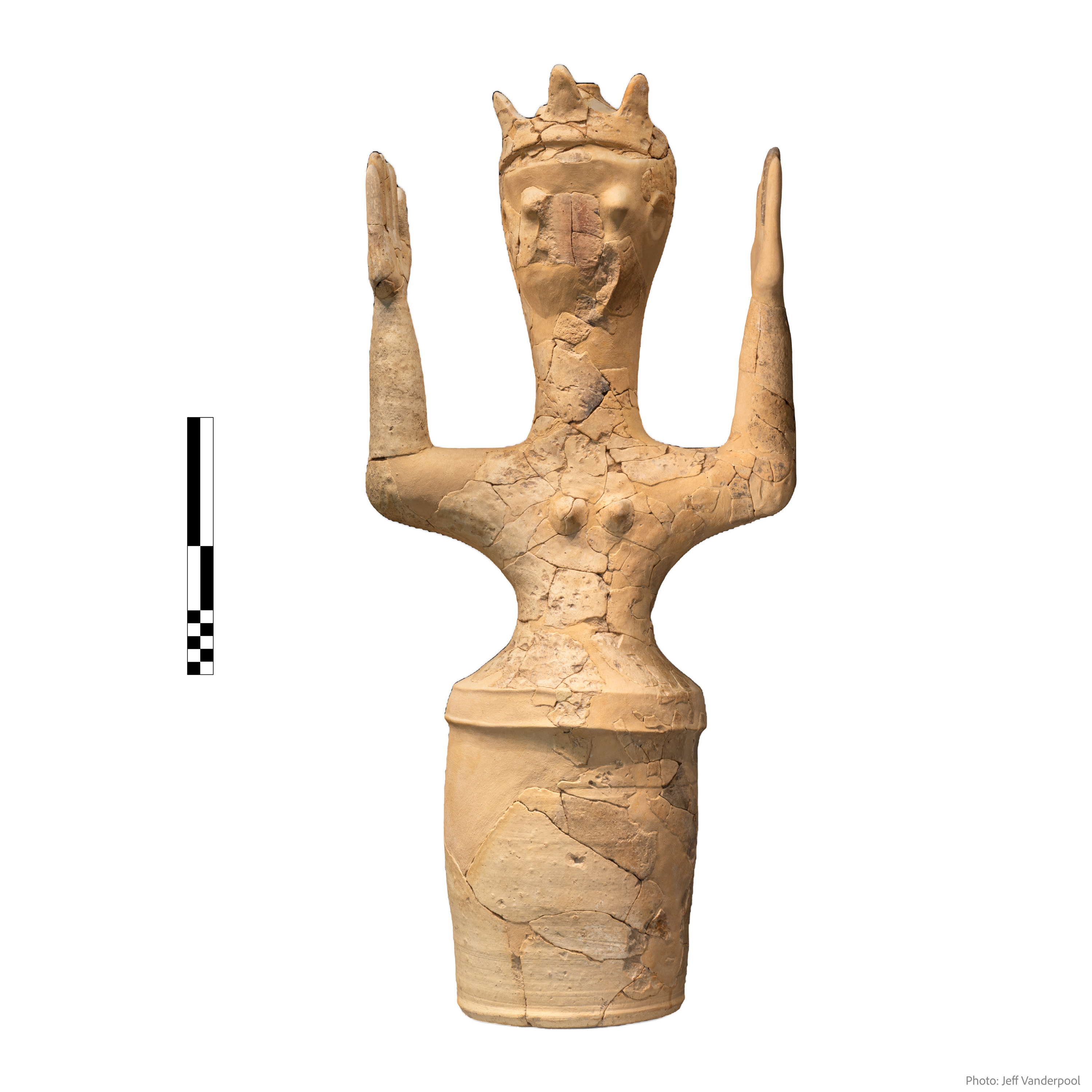 PREHISTORIC PERIOD
The so-called “megaron” of Vathypetrois located in Piso Livadia, southeast of Mount Juchtas, in Crete. According to Marinatos, the buildings complex constituted a megaron designed to the size of a palace, but it was never fully completed. The “megaron” consisted of the east and west wings. Marinatos identified two phases for the west wing. The first phase dates to the early Late Minoan IA period, around 1580 BC, and lasted about 30 years. In ca. 1550 BC, the west wing was probably destroyed by an earthquake. Immediately afterwards, the rooms in its southern part were reused as a rural residence and industrial center. A new research was conducted in Vathypetro, which concluded that the so-called “megaron” was a complex of two different buildings belonging to a wider settlement.
 ARCHAIC TO ROMAN PERIODS,
PREHISTORIC PERIOD
ARCHAIC TO ROMAN PERIODS,
PREHISTORIC PERIOD
Non-organized archaeological site
The first occupation of the site dates to the Protopalatial period (2100-1700 BC) and the second during the Post-Palatial to the Early Orientalizing period (12th – 8th c. BC). On the top of the rocky hill, a settlement was excavated, which is considered to have occupied an area of 15-18 acres at its peak. Residential complexes, courtyards, roads, storehouses and domestic shrines were found. Numerous graves of various types were investigatedon the mound and wider area.
 ARCHAIC TO ROMAN PERIODS,
PREHISTORIC PERIOD
ARCHAIC TO ROMAN PERIODS,
PREHISTORIC PERIOD
The location on the Agio Pneuma peak,Rethymno, was identified as a Peak Sanctuary from which many figurines and pottery derive. The archaeological finds indicate that the human presence dates long before the site’s use as a sanctuary. There are habitation traces from the Final Neolithic period (4000-3200 BC), but most of the material belongs to the early Neopalatial period. There is also a limited presence of pottery dating to the LMIIIb and c period (1350-1000 BC), the end of the Minoan period, usually associated with the Mycenaean presence in Crete. However, it is unclear whether, at the end of the Late Bronze Age, the human presence was related to some continuity of worship or is associated with the habitation of the same period around the hill, as shown by surface research. The human presence continues during the Protogeometric and Archaic periods and then is lost.
ARCHAIC TO ROMAN PERIODS
Non-organized archaeological site
On the Trachilos peninsula in the area of Xerokampos, there was a coastal peak sanctuary, while at the site of Farmakokefalos Xerokampos, the ruins of an ancient fortified settlement have been found, which is supposedly identified with ancient Ambelos. During the excavations, a cluster of buildings came to light, which constituted part of a settlement. Most have rooms with a floor of tamped earth, hearths and open spaces. The finds date from the early 4th to the early 1st c. BC. Roman pottery is not absent from the area of Farmakokefalos.
PREHISTORIC PERIOD
Non-organized archaeological site
 PREHISTORIC PERIOD
Organized archaeological site with parking area, ticket office, facilities for disabled visitors, toilets and shop.
The palace was at least two storeys high, as evidenced by the existence of five staircases, the strong construction of the walls of the ground-floor apartments, and the discovery of scattered finds coming from a great height. Its architectural plan is similar to the other palaces of Crete. The complex is divided into four wings enclosing a central courtyard measuring about 30×12 m. The palace was destroyed by fire in the late Neo-Palatial period (around 1450 BC) without being reoccupied.The Minoan settlement extends around the perimeter of the palace. It occupies the two nearby rocky hills, the northeastern and the southwestern hill, known as the hill of Agios Antonios. A gorge connects the two sites, called the “Gorge of the Dead”. The settlement consisted of blocks surrounded by paved roads. It dates to the Protopalatial period and was utterly destroyed along with the palace around 1400 BC. Some buildings were reoccupied around 1300 BC, but afterwards, the area was abandoned entirely.
In the so-called “Gorge of the Dead” after the numerous caves and rock shelters within the gorge used for burials, dating from the Pre-Palatial period to Geometric times.
The Pelekita site is located on a hill northeast of the palace of Zakros, north of Zakros Bay. To the southwest, a short distance away, is the Pelekita cave, also known as Sykias Spilios. It is one of the largest caves in Crete, with a documented length of 310 m and an approximate area of 4,500 m². The cave was used from the Neolithic to the Middle Minoan period for human habitation.


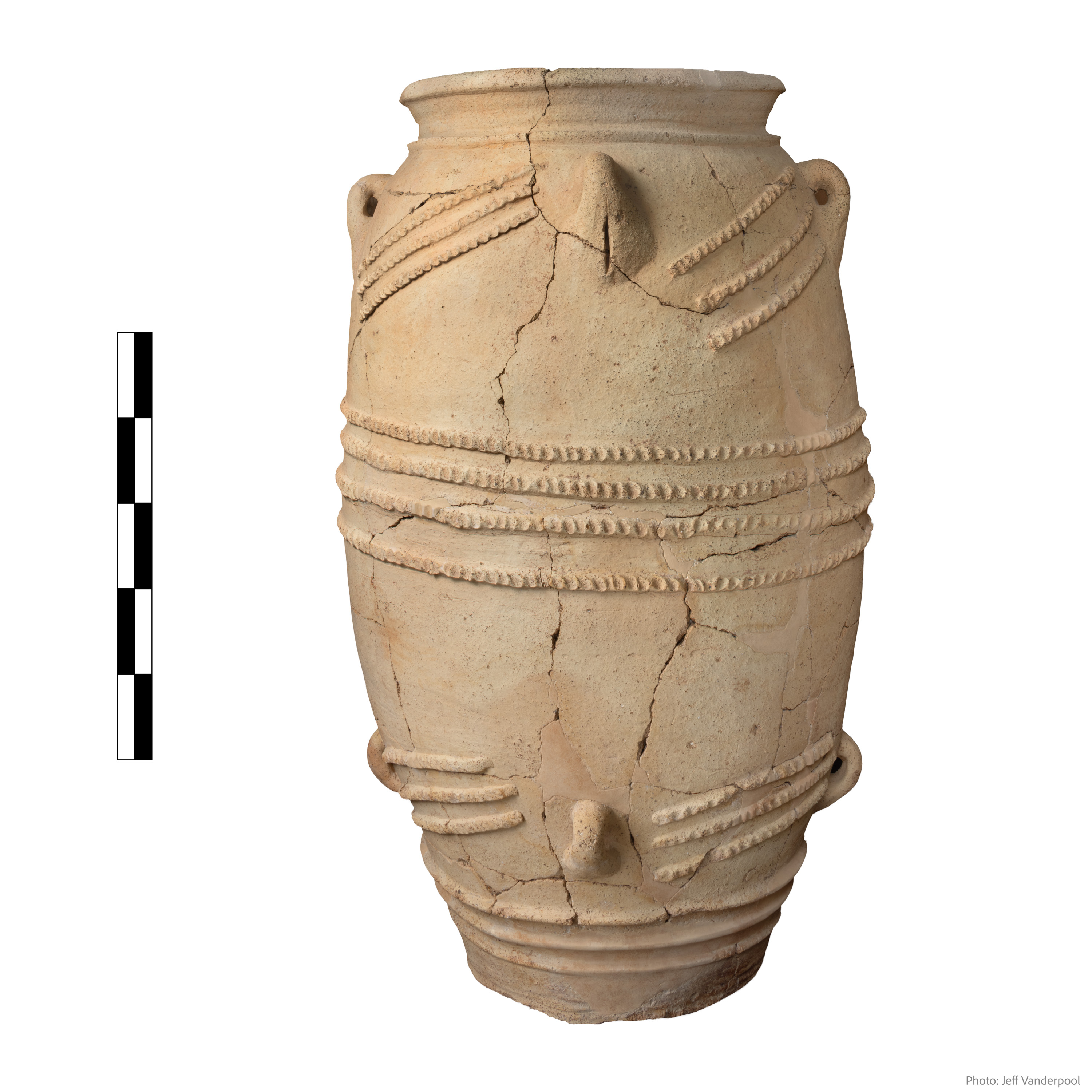


 ARCHAIC TO ROMAN PERIODS,
BYZANTINE PERIOD,
PREHISTORIC PERIOD
ARCHAIC TO ROMAN PERIODS,
BYZANTINE PERIOD,
PREHISTORIC PERIOD
The palace of Zominthos is a unique Minoan center, religious, economic and productive, at an altitude of 1200 m, perfectly organized, with many religious areas, workshops for the processing of raw materials and the manufacture of objects, such as the ceramic workshop with the kiln next to it and the furnace for bronzesmith, and ample storage capacity, as indicated by the pithoi for the storage of mountain products, including the famous herbs of Psiloritis, but also wool. Most importantly, its importance and religious role in the worship of Zeus for centuries is proven by the labyrinthine building and the ritual objects that have come to light.
Founded about halfway on the route from Knossos to Idaion Andron, Zominthos was, for the Minoans, the place that could replace the sacred cave during the winter months of the year when access to it was difficult. Despite its long habitation from the Minoan to the Venetian era and many modifications and successive looting, it preserves many elements that prove its great importance.
 PREHISTORIC PERIOD
Non-organized archaeological site
About 20 rooms are preserved, extending in five successive stepped levels, following the slope of the hill. The rooms communicated with each other with staircases or ramps. Many of them had a storage or workshop function. The country villa had a very short period of habitation during the Neopalatial period (1700 – 1580 BC) and was probably destroyed by an earthquake. In Geometric times, there seems to have been a partial reinhabitation.
